WELCOME OUR NEW STAFF: MILO LISTER
We are excited to welcome Milo Lister to our team! Here’s more info about Milo:
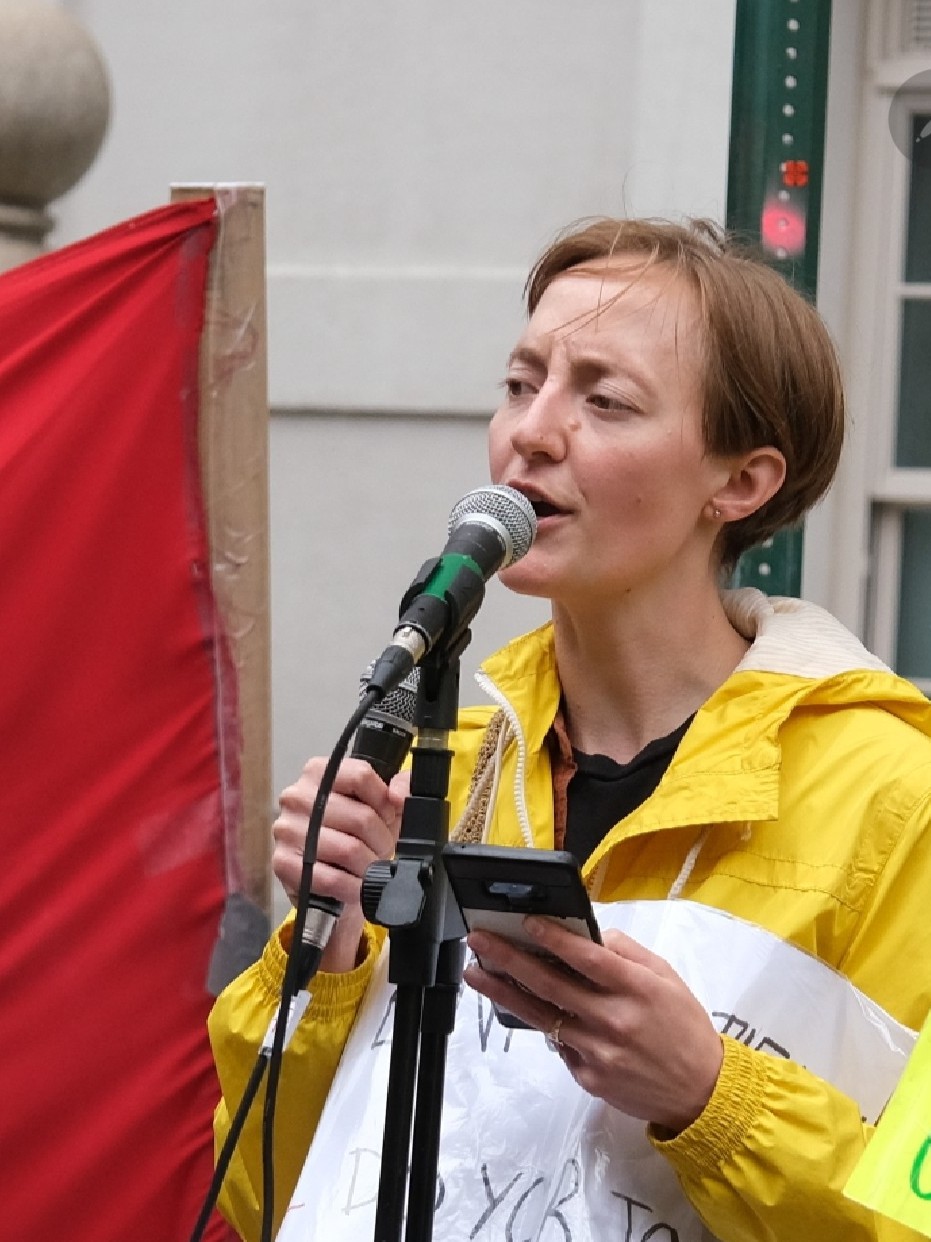 Milo Lister, they / them or she / her
Coalition Organizer
Milo, also known as Mary, is excited to join the Clean Air Coalition team as a Coalition Organizer. Milo brings over 10 years of community organizing experience to the role, with wins in tenant organizing, workers rights, public health, and reallocating police-related funding and resources.
Milo is passionate about member-led and working class-oriented organizations, and has interned with the National Mobilization Against Sweatshops, worked as an organizer with WNY Council on Occupational Safety and Health, and served as an upstate coordinator on the Securing Wages Earned Against Theft Campaign and the Ain’t I A Woman?! Campaign. Milo helped found Queen City Workers Center (QCWC), a member-led, working-class organization in Buffalo that fights for workplace rights, builds tenant power, and has provided support to families experiencing the effects of incarceration. Milo has served as a housing organizer, board treasurer, and board president with QCWC, and loves seeing member leaders grow. Milo has a bachelor’s degree in Sociology with a minor in Spanish from Binghamton University. Apart from organizing, Milo has spent much of their career working with people with disabilities.
In their free time, Milo enjoys spending time with their large family, especially chasing around their niece and nephew. Milo is known for their huge sweet tooth and enjoys baking. Milo has lived in WNY for most of their life, and loves to take in the scenery through long runs along the waterfront.
May-June 2026 Monthly Updates: Take Action TODAY to Pass a Statewide Data Center Moratorium!
Click here to subscribe to our monthly e-newsletter, and view this month’s edition by clicking the “More” link just below.

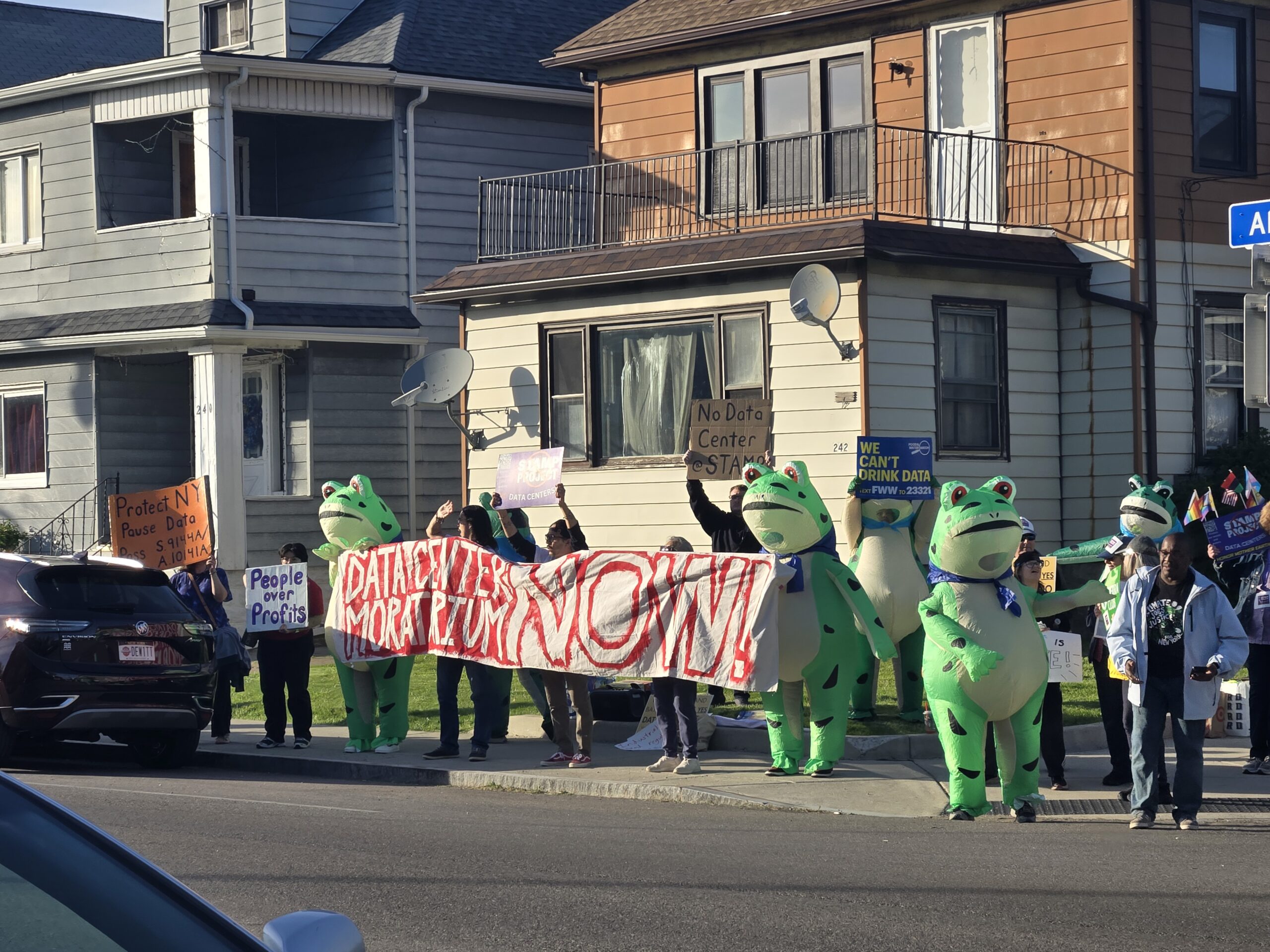
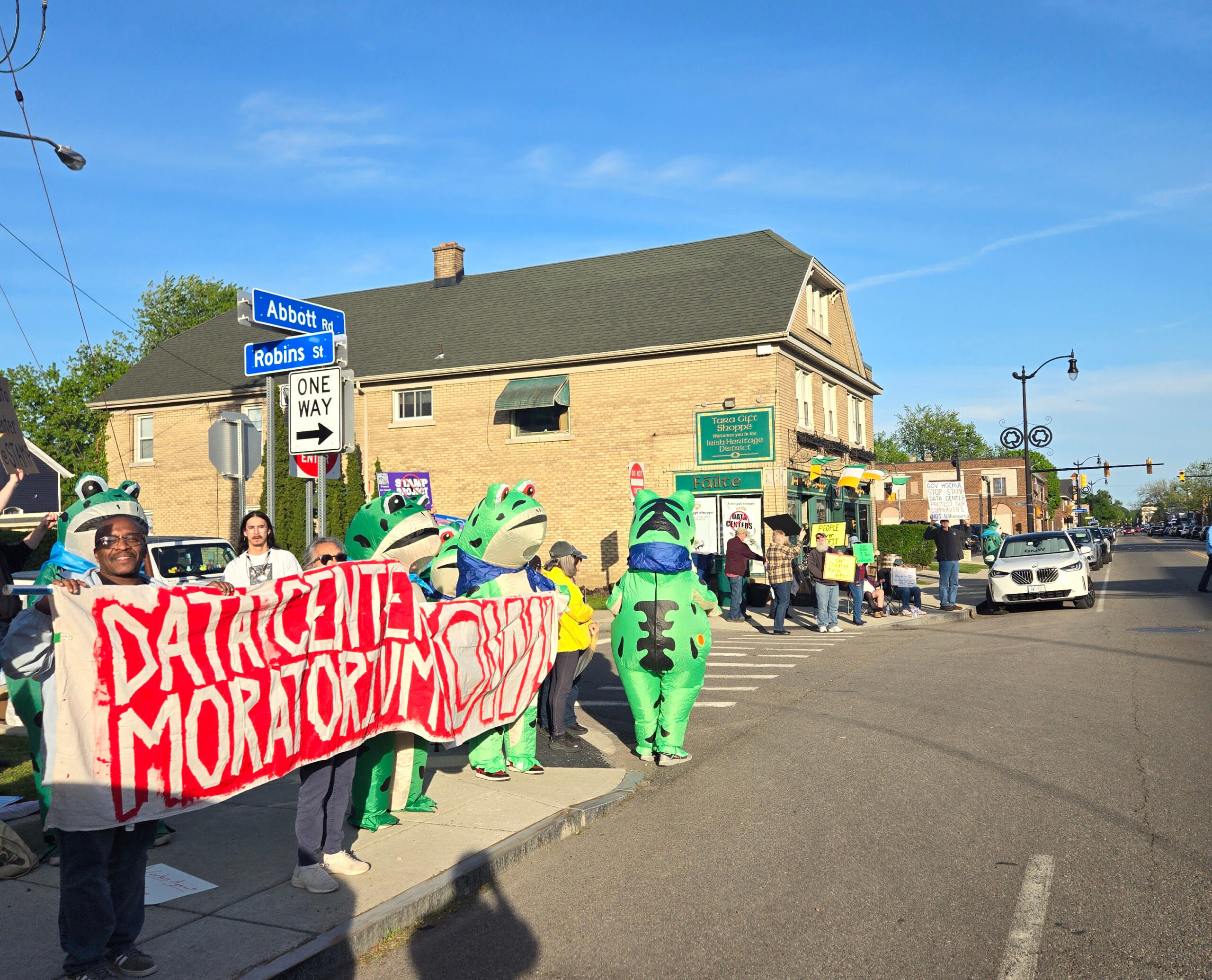
April-May 2026 Monthly Updates: Join us on May 20 for our Data Center Campaign Kick-off!
Click here to subscribe to our monthly e-newsletter, and view this month’s edition by clicking the “More” link just below.
(more…)
Press Conference – May Day Strong Rally “All of us against the tech billionaires”, Call to Pass Data Center Moratorium
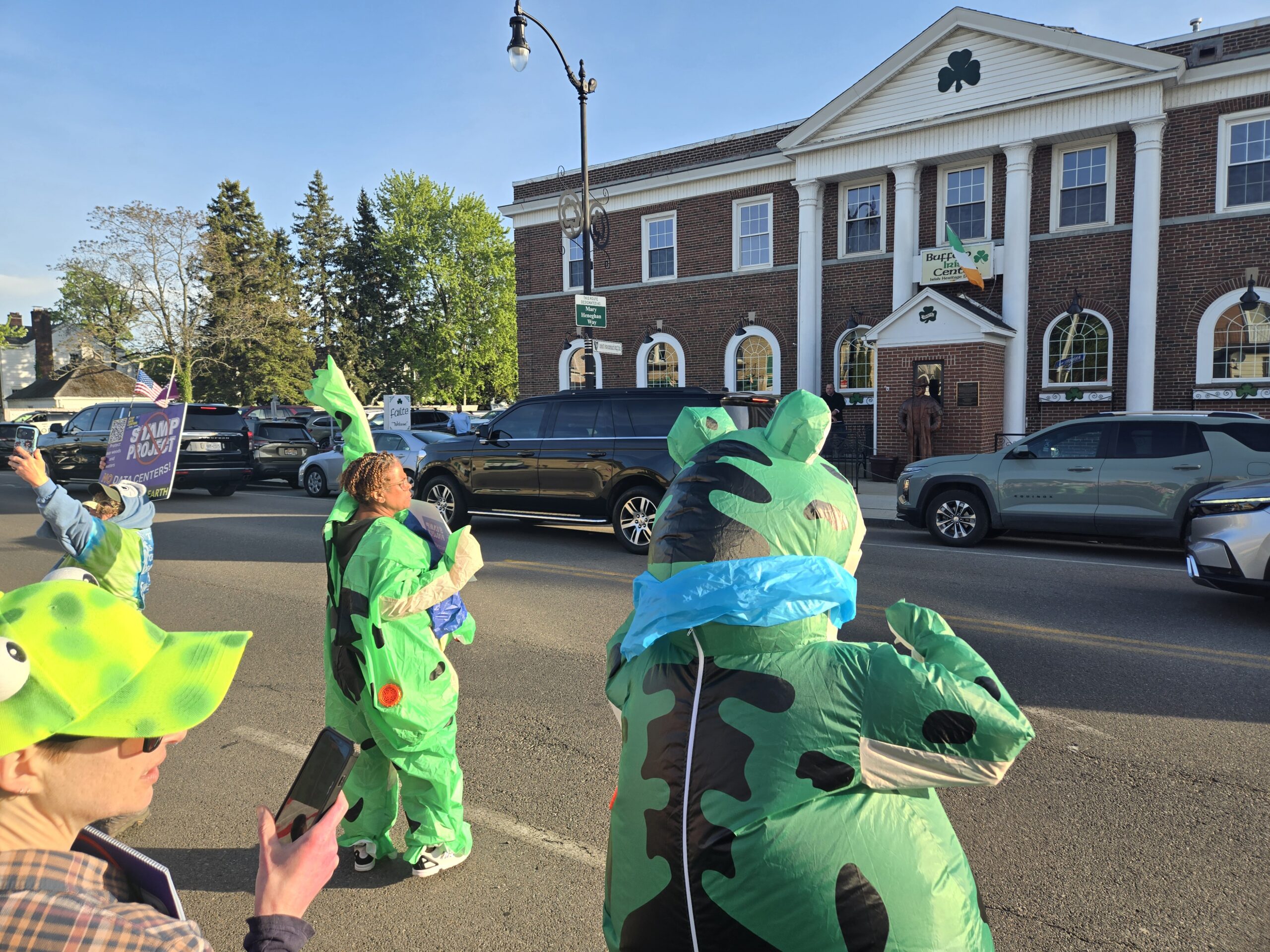
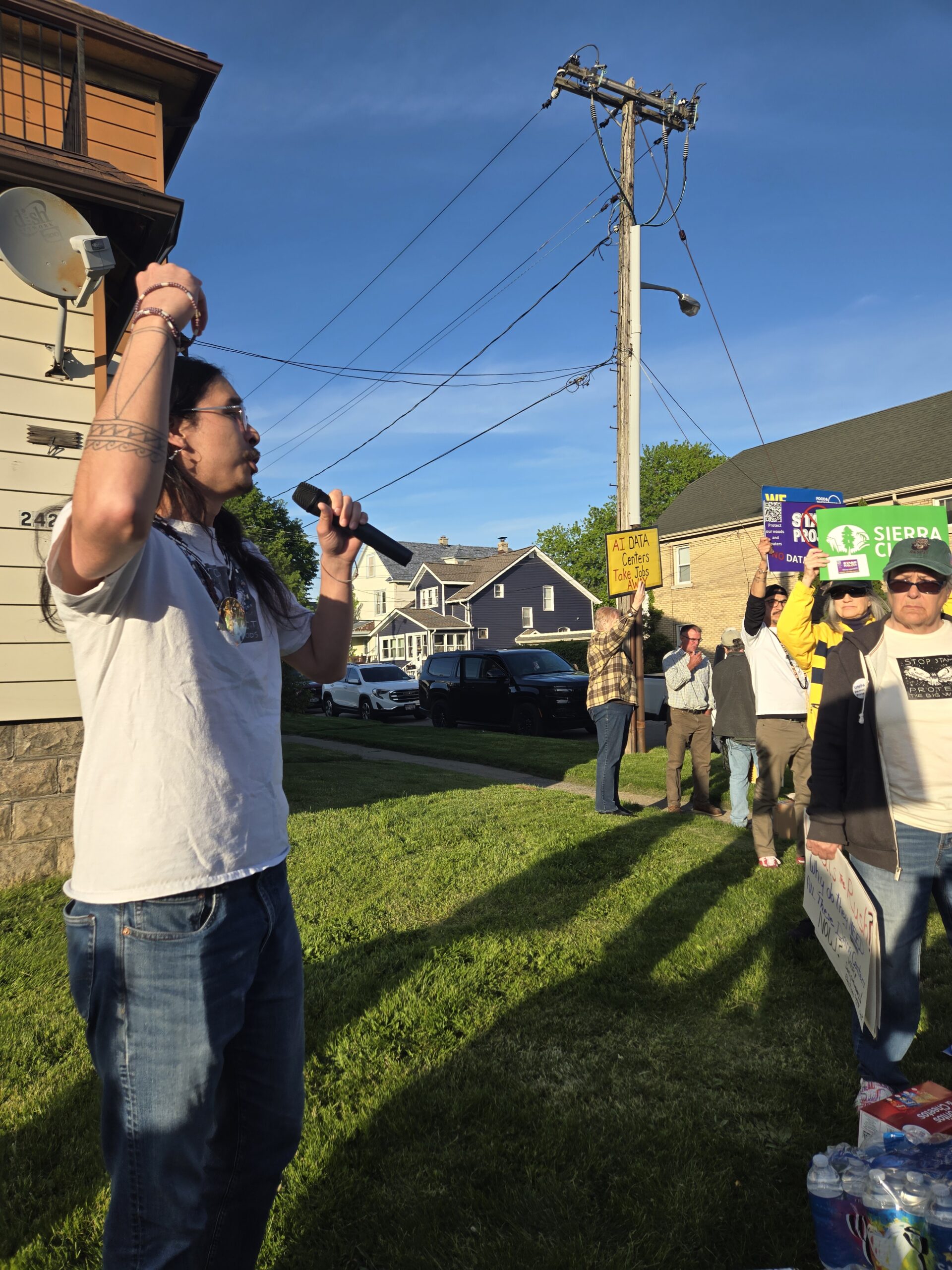
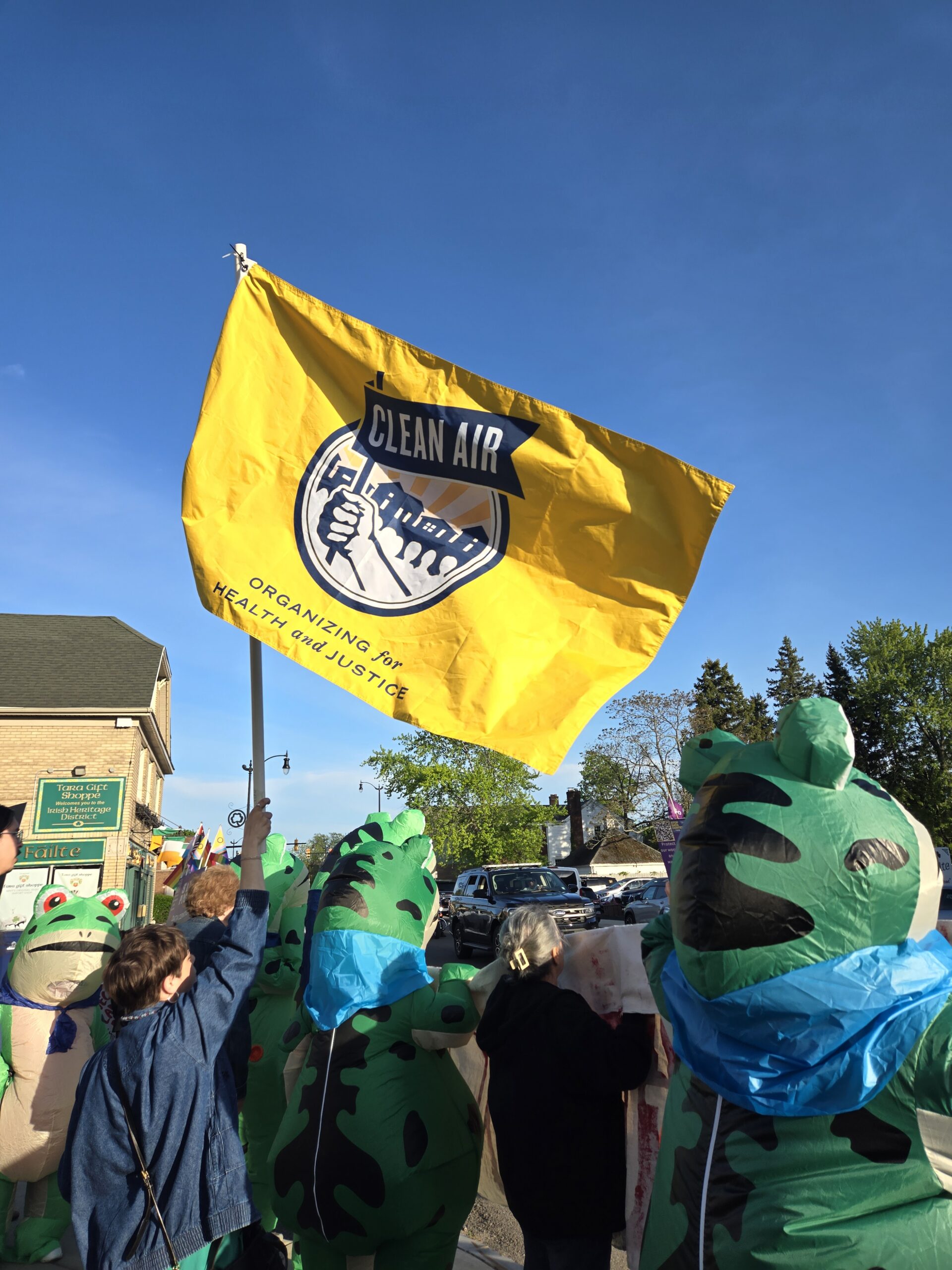
Clean Air members joined representatives from Senator Baskin and Assemblymember McMahon on May Day for a short rally as part of the May Day Strong day of action to call for the passage of S9144/A10141, which would implement a three-year moratorium on data centers in New York State.
Send a letter today urging the rapid passage of this bill by clicking here, and sign up to join us for a lobby day in Albany next Wednesday May 13, with a free bus leaving from our office in Buffalo!
Check out the coverage from Niagara Gazette, the press release, and a partial recording of the press conference below!
- Clean air group, state lawmakers rally in Buffalo against ‘tech billionaires’ and data centers
- Two Projects: What if the ‘Two-Project Solution’ offers no real solutions for NF?
View this post on Instagram
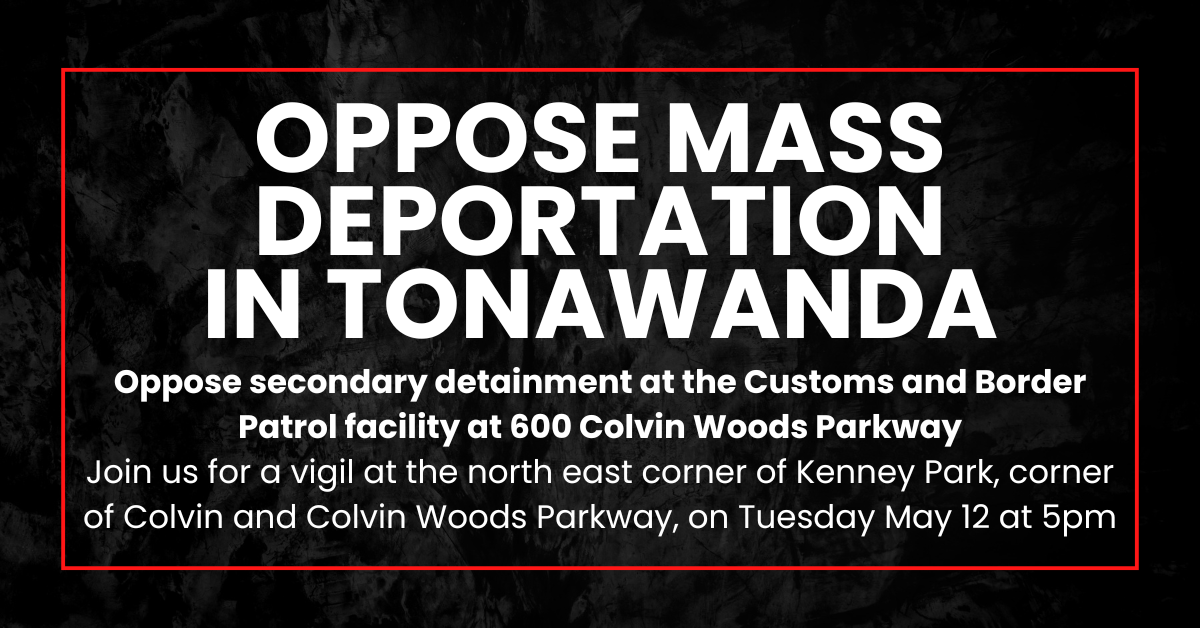
Customs and Border Patrol at 600 Colvin Woods Parkway – Vigil May 12
Please join us on Tuesday May 12 at 4:30pm at the corner of Colvin and Colvin Woods Parkway (northeast corner of Kenney Park) for a vigil to call public attention to the Customs and Border Patrol facility at 600 Colvin Woods Parkway within the Colvin Woods Business Park.
In addition to it’s regular use for secondary detainment and processing of undocumented immigrants after arrest, this facility is believed to be the station where the CBP officers who left Nurul Amin Shah Alam alone in the cold are based out of.
Please also take a moment to use our two letter campaign tools – the first is to send a letter to Congressmember Kennedy urging him to inspect this facility, and the second is calling on the private sector landlord, Government Investment Partners based in Deerfield Illinois, to not renew the lease with CBP when it expires this August.
- Letter to Congressmember Kennedy
- Letter to Government Investment Partners leadership team – President Kris Jankowski, VP Bob Cottle, and VP Dan Wyatt.
Share this post! Actions to Take Now Regarding the RITC (Tonawanda Coke) Data Center
We know folks are as interested in the data center development at the former Tonawanda Coke as we are, and we just wanted to share a few actions you can take right now. Please also note that we have a couple older blog posts that cover some of the topics below more in-depth.
- Solar and Battery Storage for Tonawanda Coke, Not Data Centers!
- Send a Letter to the Public Service Commission – Make Industrial Data Centers Pay Their Fair Share!
- First, there are two important letter campaigns we urge you to use right now
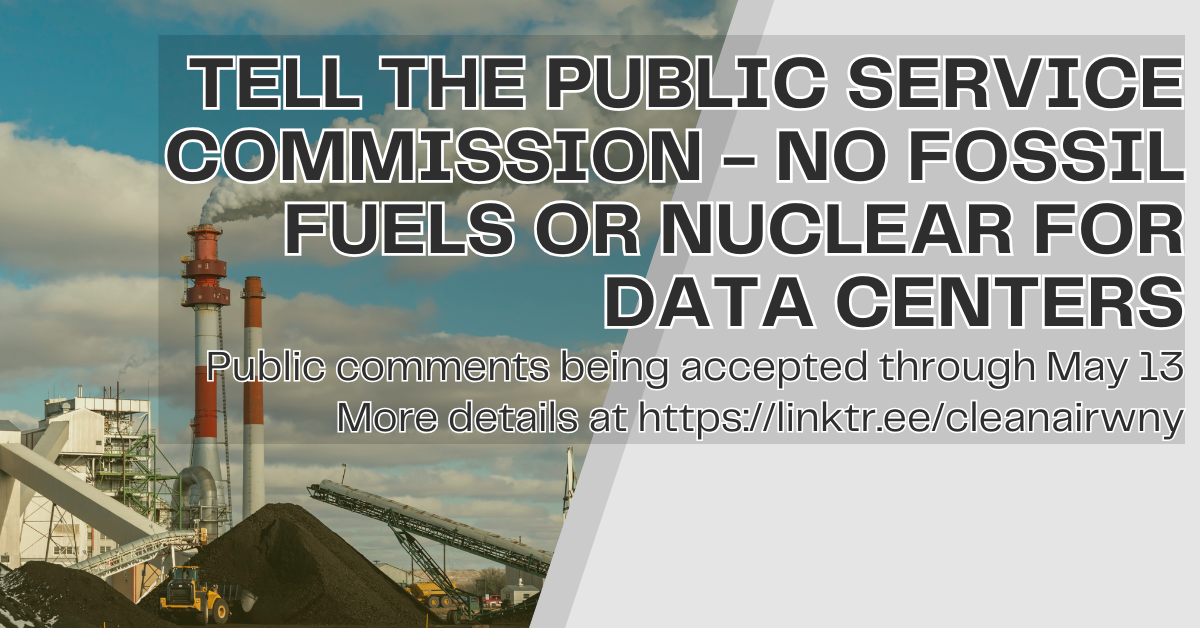
- Send a letter to the Public Service Commission regarding the energy use of data centers BY EOD WEDNESDAY MAY 13
- Send a letter to our representatives in Albany urging them to co-sponsor and vote for the 3-year statewide moratorium bill (S9144/A10141) currently being considered. Currently the only WNY representatives who have publicly endorsed this bill are Assemblywoman McMahon and Senator Baskin. Due to the stalled budget, there will be a truncated legislative session this year, and this is a new bill, so we need to build pressure fast to push quick action by our representatives! We are also discussing participating in a lobby day in Albany on Wednesday May 13, possibly even filling a bus – if you are interested in this, please contact Bridge and fill out the Food and Water Watch registration page.
- Second, regarding the Riverview Innovation Tech Campus at the former Tonawanda Coke site, we are currently reviewing the 400+ page application. We have it available to download, and would love additional help looking through it for issues. Please be aware, this is a 90mb download – click here to download.So far, what we have seen is quite honestly not the worst of the worst practices, unlike at some of the other data centers in our area, including some owned and operated by the RITC developer – that’s not to say that there aren’t areas we want to see improved, and we still maintain that the best industrial use of the site is renewable energy generation and storage. We plan to finish our review before the next Town of Tonawanda SEQR committee meeting and will be sharing our specific points of concern by that time, and again will post that on our blog and share that on our social media.In the meantime, we are also urging folks to contact the Town of Tonawanda Town Board and Planning Board to ask that
- The Town pass a 6-12 month local moratorium on any data center development to develop a local zoning amendment to regulate data centers, and send a letter to legislators in Albany in support of the statewide moratorium bill, and
- Separate the final phase of the remediation of Tonawanda Coke from the first phase of the data center development proposal. The final phase of the clean-up at 3875 River Road is capping remaining contamination in place (basically pumping concrete into the ground to solidify it so it cannot move with groundwater), and that cap is also going to in part be the concrete foundation for a warehouse. We want the Town to make it clear that approval of pouring a concrete foundation for a warehouse does NOT mean approval for a data center, and that these two phases need to be separated. We will have a letter campaign up by the end of this week to aid in submitting comments on these points as well, and will update this post to include that link.
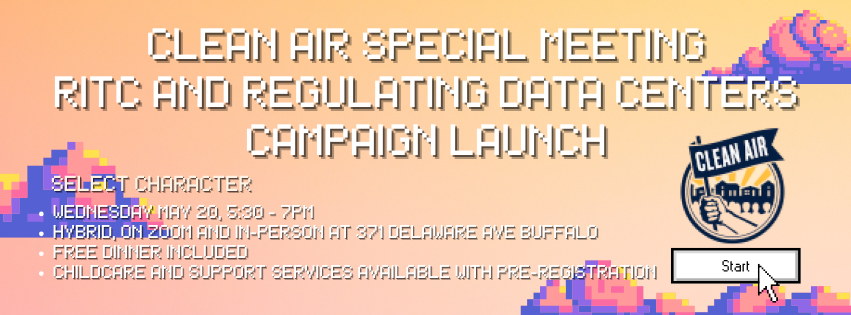
Finally, we also want to again share that we are launching a dedicated campaign regarding both the RITC project and issues about data centers broadly in Erie and Niagara County, and will be kicking things off with a a meeting on Wednesday May 20 – you can register now at this link. This meeting will be available both in-person at Trinity Church in downtown Buffalo as well as online.
You can become a Clean Air member right now by making a donation of any amount to support our work. The more grassroots donations we receive, the less we need to rely on grants and more autonomous we can be in taking on this fight.
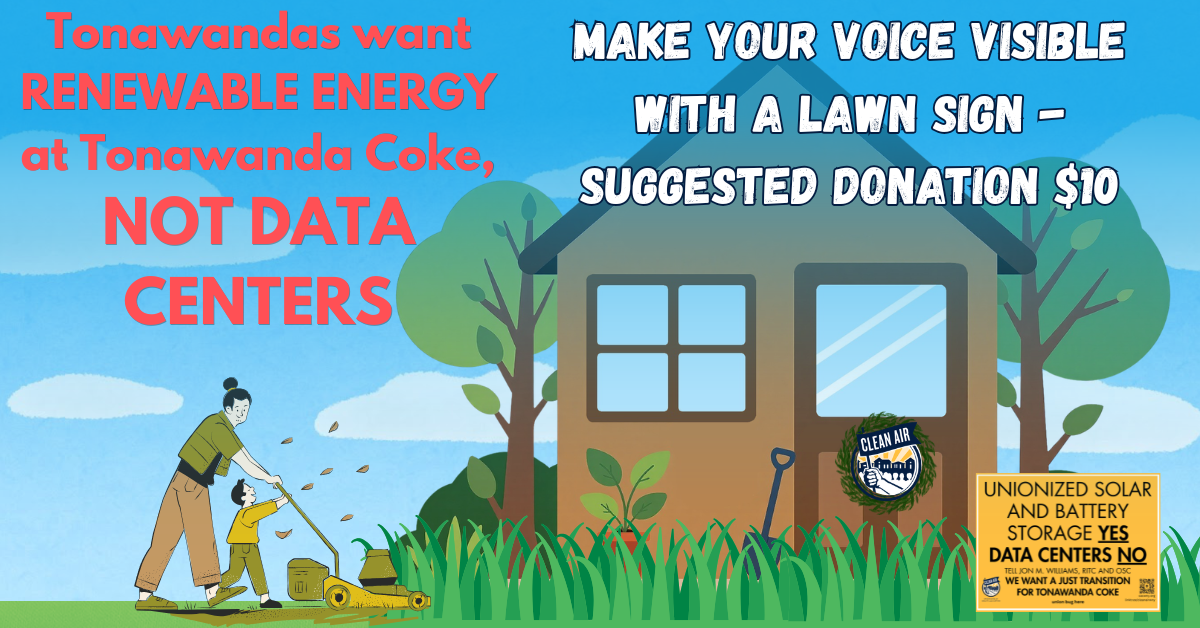
We are also taking pre-orders for lawn signs that we will have available June 1 to make your opposition to a data center at RITC, or generally the pattern of unregulated industrial data centers broadly, visible in Tonawanda and our community at large.
If anyone has any questions or if you want to get involved in this campaign, please don’t hesitate to reach out to bridge@cacwny.org – they will reply as soon as they are able.
Send a Letter to the Public Service Commission – Make Industrial Data Centers Pay Their Fair Share!
You may recall that in Governor Hochul’s 2025 State of the State, she introduced the idea of a policy that would require private sector “hyperscale” industrial data centers “bring their own generation” to help rein in rising electrical rates.
This would be a wise policy – as the Public Service Commission itself notes, “As of February 2026, 11.9 gigawatts (GW) of load within the New York Independent System Operator, Inc. (NYISO) interconnection queue are attributed to future large load projects. In 2025 alone, more than 8.3 GW of new load entered the NYISO queue, exemplifying the emerging challenge presented by large load interconnections. These interconnection requests may introduce planning uncertainty through speculative or duplicative interconnection requests, and the projects themselves often require significant electric supply and may drive the need for major grid upgrades. ”
However, the PSC needs to hear from us by May 13 to develop these guidelines – specifically, we are urging that the PSC require that this generation be restricted to renewable power.
We have already seen numerous examples right here in Erie and Niagara County of data center developers purchasing obsolete fossil fuel based power stations, such as DigiPowerX’s purchase of the former Fortistar gas-fired peaker power plant in North Tonawanda – without clear guidelines banning non-renewable power, these data center developers will simply scale up this practice under this proposed guideline.
Send a letter today – you can either use our one click ActionNetwork toolkit by clicking here, or you can use the PSC’s “Matter Master” portal by clicking here.
If using the latter method, you’ll need to find the “Post Comments” button on the top right. You can also look at other posted comments by clicking “Public Comments.” Please note, your comment will also be public if you use this method.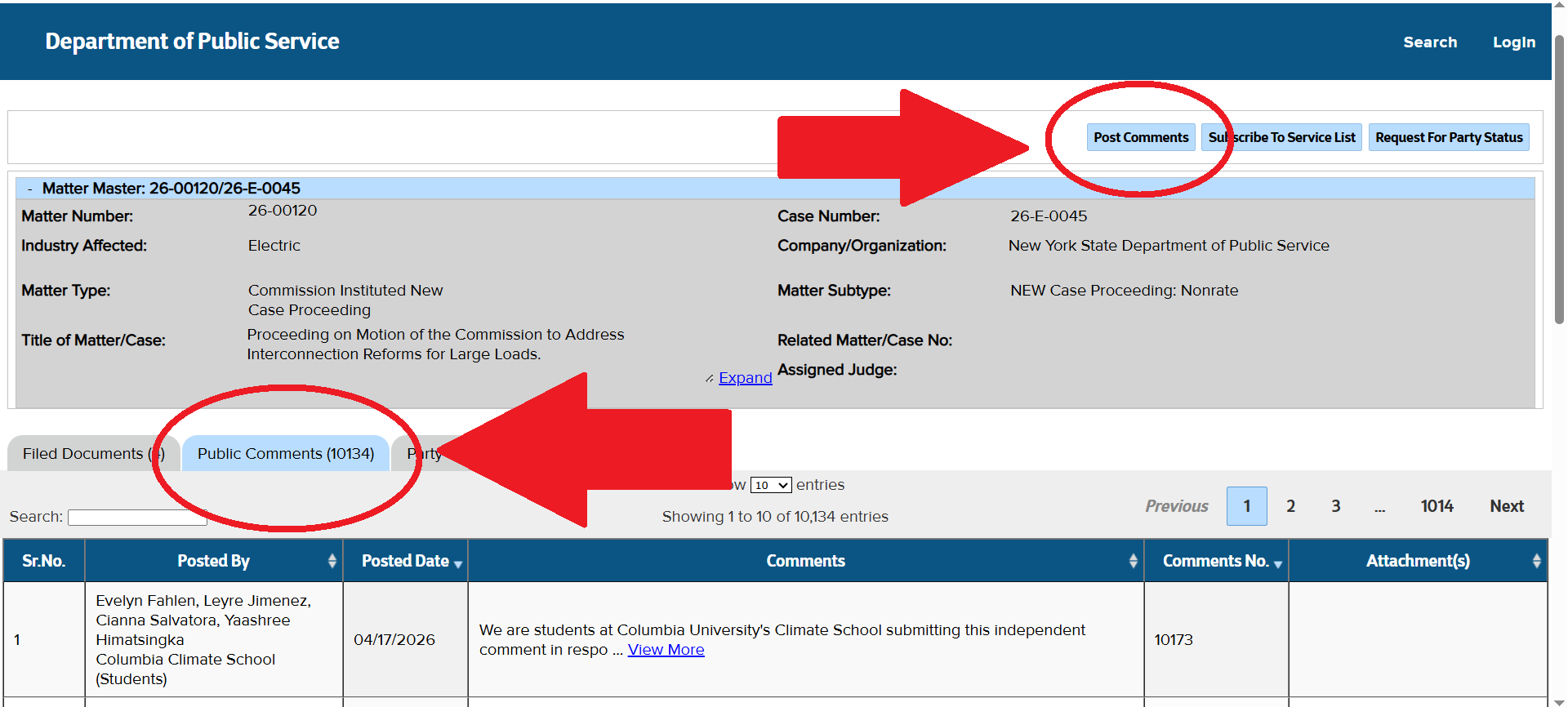
Next, you’ll need to fill in the required information – First and Last Name, your address, and your email address.
In the “Comments” box, you can either fill in a custom comment, or you can copy and paste the text below. Please be aware that you’re limited to 3950 characters. Then, click the “I am not a robot” and the checkbox for the disclaimer about the PSC’s rules for comment submission. Finally, click “Post Comment” at the bottom
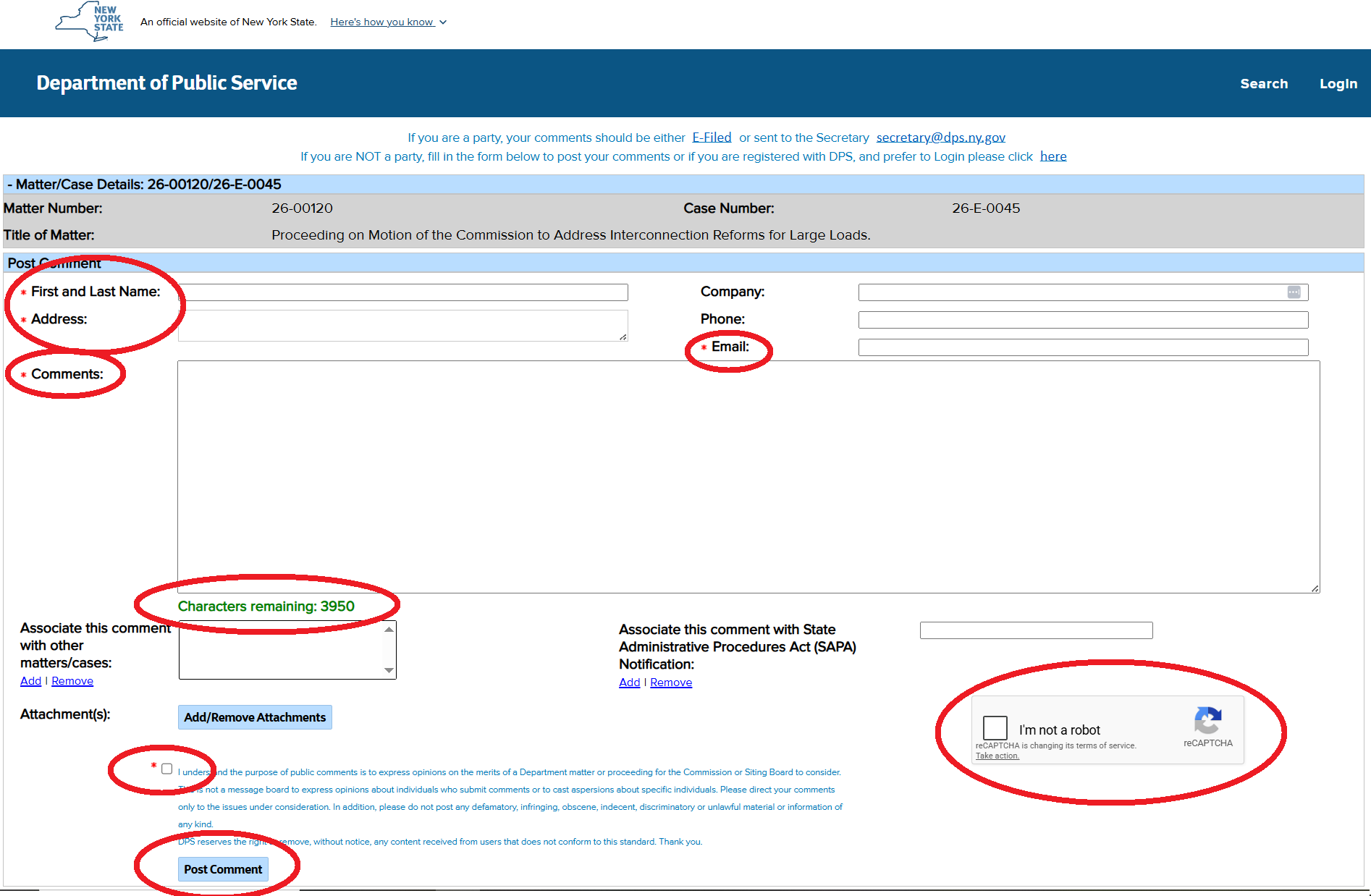
Our suggested text to copy/paste and personalize –
I write concerning PSC Case Number 26-E-0045, the Proceeding on Motion of the Commission to Address Interconnection Reforms for Large Loads.
I am troubled by the scale & speed of the buildout of private sector industrial “hyperscale” data centers, as well as the complete lack of regulations of this new industrial sector. There are numerous acute affects from these operations, but of note today is how data centers affect electrical rates, which usually increase for all existing ratepayers when a new data center comes online– this includes not only residents, but also industries, especially older industrial facilities with steeper challenges to upgrading equipment to reduce energy demand, & which often have unionized workforces. In contrast, this industry creates very few permanent jobs & actively threatens thousands of both blue collar & white collar positions.
NYS should prioritize the renewable energy transition first & foremost in our macroeconomic policies to build a robust manufacturing economy for the 21st century, starting by fully implementing the CLCPA with the benchmark metrics as the law was originally written, & by refusing the energy allocations that are requested in the interconnection queue for any private sector data centers until the renewable capacity & transmission upgrades are first built out at their expense.
Governor Hochul’s proposal that data centers “cover the costs of their expansion as it relates to utilities” is a welcome move in this direction, but I am concerned about how this might be implemented. Data center developers should be restricted to renewable power generation & transmission upgrades – nuclear, gas, oil or coal must be BANNED from potential sources for their power.
We urge examining the examples of DigiPowerX in North Tonawanda, Blockfusion in Niagara Falls, Greenidge Generation in Dresden NY, & TeraWulf in both Baker NY & Lansing NY as examples of how the data center sector will approach this regulation without clear guidelines banning nuclear or fossil fuels as acceptable power generation options to meet their power demands.
In every one of these examples, data center developments are sited at obsolete power stations which these data center developers have or are attempting to purchase to use to power their operations. These plants are a mix of former coal-fired power plants or gas peaker plants, all of which are being converted to or operating with gas or nuclear, & are simply perpetuating environmental injustices in these DAC communities for another generation.
Even worse would be the example of Twitter/xAI in Memphis TN/Jackson MI- in that instance, the xAI corporation is using inefficient gas generators to power the supercomputer used for the “Grok” chatbot. Tesla in Buffalo is pursing a similar supercomputer, “Dojo” & may attempt similar harmful practices without guidelines.
https://www.politico.com/news/2025/05/06/elon-musk-xai-memphis-gas-turbines-air-pollution-permits-00317582https://www.mississippifreepress.org/mississippi-permit-board-grants-xais-request-for-41-southaven-gas-turbines-to-power-memphis-data-center/
https://www.governor.ny.gov/news/governor-hochul-highlights-budget-investments-western-new-york
We urge requiring renewable energy generation on site for all data centers to meet the energy demand of private sector data center operations, as well as capture & reuse of waste heat through thermal energy networks & other practices to reduce the energy footprint of these campuses & require unionized labor for the construction & operation of this energy infrastructure. We also urge prioritizing reuse of existing industrial lands, especially brownfield sites.
The PSC & NYISO should deny all interconnection requests of data center operators until renewable power generation & transmission can first meet the demand of existing ratepayers in NY plus their requested additional large loads.
Make tech billionaires pay a fair share
Let us be clear – the modern “hyperscale” data center is an unregulated industrial operation. We need regulations, and we need them now.
But this industrial sector is moving faster than our regulatory bodies can keep up – please take action today to submit a letter as part of this comment period, and also send a letter to our representatives in Albany urging them to prioritize a 3-year moratorium on data centers in the 2026 legislative session so our regulators can catch up.
March-April 2026 Monthly Updates: Register Today for our Annual Dinner on Thursday April 30!
Click here to subscribe to our monthly e-newsletter, and view this month’s edition by clicking the “More” link just below.
600 Colvin Woods Parkway – Next Steps
We are thrilled to share that the first phase of our campaign focusing on the Customs and Border Patrol station at 600 Colvin Woods has come to a successful close.
We set out with some very basic goals in mind, all with Q1 of 2026 in mind –
- Resist mass deportations in Tonawanda and WNY
- Get local elected leadership in WNY to take a more active role in deportation resistance
- Highlight how zoning and land use decisions play a role, and can be used as a tool of resistance
- Raise public awareness of secondary facilities used in mass deportation operations, and help put pressure on ICE and CBP in WNY
- Support immigrant rights organizations, build our base, and meet the moment
In the space of just three months, we have –
- Launched a very successful series of vigils at the corner of Colvin and Colvin Woods Parkway to raise public awareness of the facility at 600 CWP
- Pushed the Town of Tonawanda to issue a statement clarifying policies around how TTPD interacts with ICE and CBP
- Pushed Town of Tonawanda officials to examine what leverage they might have
- Pushed Town of Tonawanda officials to issue letters to our representatives in Albany in support of NY4All, to Congressmember Kennedy urging his intervention, as well as the landlord voicing concerns about CBP’s continued presence at 600 CWP
- Pushed Congressmember Kennedy directly to issue a formal letter to CBP raising concerns for the wellness of detainees held at 600 CWP, especially following the news that Nurul Amin Shah Alam was left in Black Rock by CBP officers who are believed to be from this station.
We are far from done with our work at 600 CWP, but we are shifting our goals as well as who we plan to put pressure on.
We will continue to hold the vigils at least once a month indefinitely, and urge our members and followers to send a letter to Congressmember Kennedy urging that he come and conduct an inspection.
We will be posting more about our other next steps soon – in the meantime, if you are interested in joining this effort, which is part of our Tonawanda Tomorrow Team and our Tonawanda Just Transition Campaign, please reach out to Bridge.