Natasha’s time @ Greenpeace Training
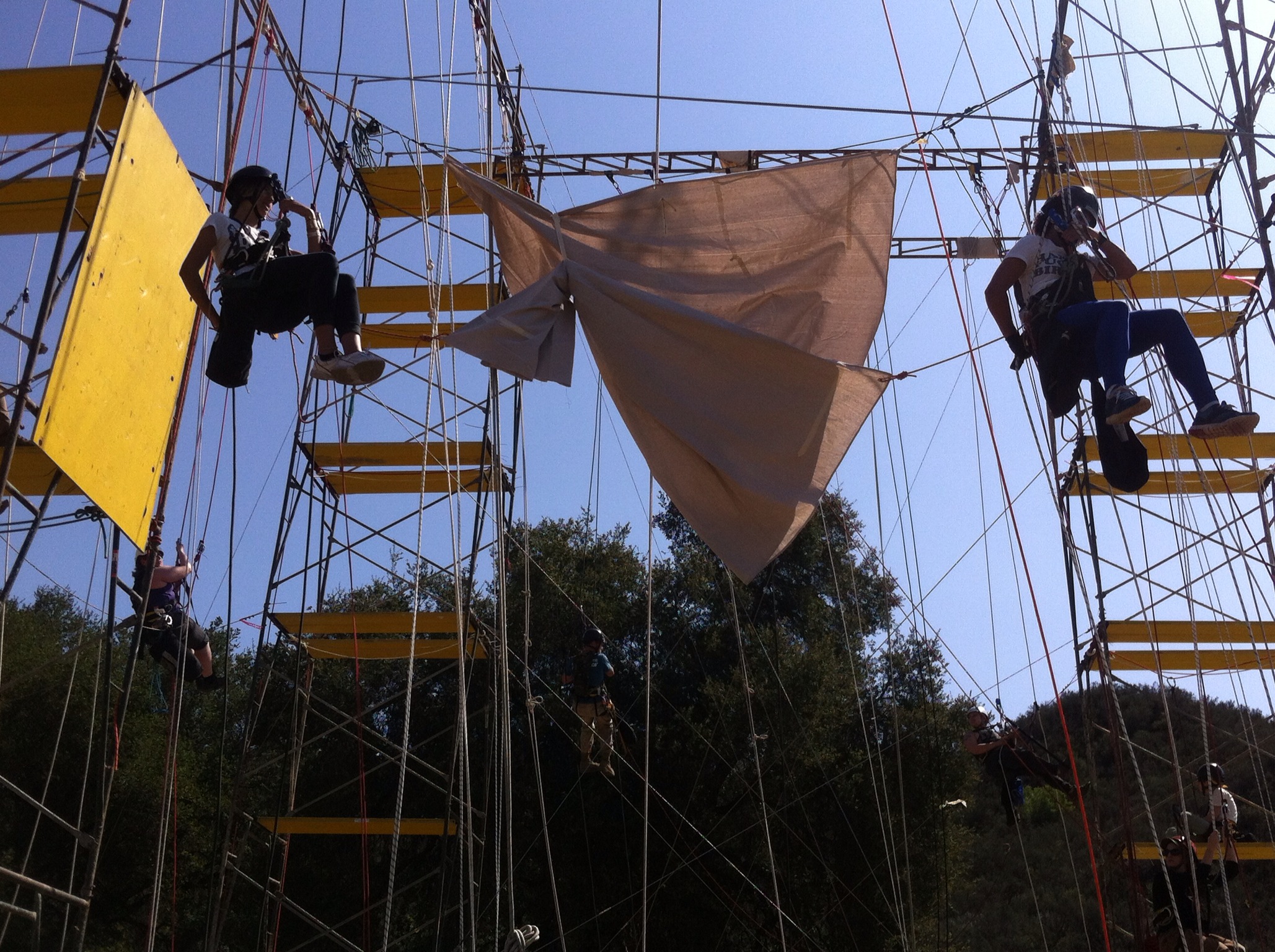
Some of you may know that I was away in sunny Los Angeles at Greenpeace’s Non- Violent Direct Action Camp for an entire week, and if you didn’t, now you know. I took in some sun, but most importantly, I took in some climbing skills- yes, climbing!

This is the second direct action camp GP has held in the past 21 years, when they used to do them quite regularly (at least that is my understanding), and they offer 4 different tracts: Climbing, Arts in Action, Blockades, and Boating. Me, I chose climbing so that I can scale buildings a fly through downtown like Spiderman! If you are not familiar with GP they are “the leading independent campaigning organization that uses peaceful protest and creative communication to expose global environmental problems and to promote solutions that are essential to a green and peaceful future.” They work all over the world on various environmental campaigns: Protect Ancient Forests, Protecting our Oceans, Stop Global Warming, No New Nukes, Chemical Security, and Sustainable Agriculture using non-violent direct action- which is what I went to learn.
If you are an active member of Clean Air, you know that we use actions to gain media and public attention, and to push our elected officials to act, but those actions have equated to rallies for the most part, and I think we need to shake it up! At camp, I learned how to climb on ropes and scaffolding, how to scout for an action, a little bit of stenciling and blockades, and the basics of dropping banners, and I am really excited to bring all of these skills to the Coalition.
I also learned that we have a lot of work to do if we want the environmental movement to be completely inclusive of the individuals who are most affected by environmental injustices. The training was free and GP provided some travel stipends, but traveling to Los Angeles isn’t cheap, and I did some fundraising for it (thank you to those who donated!), the gear needed to climb and to drop banners is also expensive, not to mention the insurance needed to perform those actions, and possible bail money depending on the type of action- all of these factors add up and contribute to whom can participate. Also, from about 160 participants at camp, there were only about 9 individuals of color, and I think that’s a problem. There was a serious disconnect between environmentalism and environmental justice throughout the week. To me, those two things are very different, and while ultimately they are hopefully achieving the same long term goal, the means to get there look very different and GP was very intentional about admitting that they still have long strides to make to bridge that gap and to make sure that the movement is more inclusive than it has been in the past, and how it is currently.
All in all, I am very glad to have gone to camp (I also got a tan!) and to have met such great people doing amazing work, and to have come back in one piece and with great skills in my back pocket. I will be speaking with the ladies at the office on how we can use these skills to advance our work in the future, but until now, it will be stored in my head, fermenting and juicing until we can make it our own- and it will be delicious!
You can read more about Greenpeace and Action Camp in their blog: http://greenpeaceblogs.org/2013/03/27/at-greenpeace-action-camp-a-vision-of-the-movement-we-want/
A small excerpt from Natasha’s time at Stone Circles (apologies for the late post!)
Stone Circles at Stone House- Facilitating Deeper Practices Training Retreat
Firstly, I want to express my gratitude to everyone who made a contribution in order to make it possible for me to attend the Training Retreat- THANK YOU, it was EXACTLY what I needed.
I entered Stone Circles the first day thinking that I was going to get a set of tools that I could use to make me a better facilitator, but quickly found out that it was not that type of training.
Sure, Claudia Horwitz, and Marian Urquilla presented us with tools and supplied us with handouts we should use when planning and facilitating meeting that I found extremely useful. But the deep thought and practice facilitated by Marian and Claudia was what enlightened me to why my meetings with my West Side leaders were not going as I wanted them to. So far, my takeaways from the trainings I have been to in the past are less tangible skills that I can place into my toolbox to use until they get rusty- they are more learnings about the inner workings of my persona. I find that even more relevant with Facilitating the Deeper Practices of Transformative Social Change Training Retreat (whew!) at Stone Circles where many of the activities involved meditation, reflection and journaling.
So if you’re wondering what it was that I learned whilst away- well it was simple: my group of dynamic, fearless woman warriors from the West Side is mirroring me and my behaviors all the time. Let me explain. More often than not it is far too easy to get lost in the day to day happenings of Clean Air and arrive to meetings frazzled, frustrated and far from composed and it turns out people can pick up on those feelings regardless of how well you think you are suppressing them. And I don’t mean simply “leaving your shit at the door”, but feelings of inadequacy I may be having with the work I’m doing that particular work- as you all know, it can be pretty daunting at times- gets thrown right back at me. My fearless ladies start asking me what the point of any of this is, and blame their neighbors of being apathetic when I know, they know that’s not true.
Amazing right?! Well I didn’t know these things were going on (and please pretend you didn’t either). If you are in need of a soul scrubbing, honest look into yourself that is agitational enough without being mean, I highly recommend Claudia and Marian’s work- they have a Soul Sanctuary coming up!
http://www.stonecircles.org/
Hard Work, Tonawanda Coke: A Snap Shot of Mariel’s Internship
As a student thinking about pursuing a career in environmental justice, interning at the Clean Air Coalition has been an amazing
 opportunity, and one that I am so thankful I was able to experience before graduating from Canisius College. For myself, at least, and for I’m sure many other interested students, working for a non-profit organization provides an attractive opportunity to obtain a career and a job working for a cause they strongly believe in. While I have been seriously considering non-profit work for some time, I had never worked extensively with or for a non-profit and had no idea what that exactly entailed. Therefore, working for
the Clean Air Coalition has been an invaluable opportunity to do just that.
Working for the Clean Air Coalition has taught me many things, namely that working for a non-profit, or working for any cause is HARD and takes a ton of work. Not that my internship was particularly stressful but just watching Erin, Rebecca, and Natasha run around the office and listening to the phone ring off the hook wa sproof enough that if you’re looking for a cushy or nice and easy job, don’t work for a non-profit. That’s not deterring me from still pursuing a career in a non-profit, however, as I know that the payoff when you are finally able to affect positive change makes up for all of the work a thousand times over.
Working for a non-profit also takes tireless energy and a positive attitude to be able to interact with all of the people whose minds you are trying to change or who would like to get involved with your cause. It takes incredible patience, especially when dealing with anything related to governmental operations. Justice by its nature is slow-moving and takes baby steps to get anywhere, and environmental justice is no exception. Appreciating the small victories is the only way that one can stay sane and not completely lose hope while working for a non-profit.
I’ve also learned that people are generally interested and excited to hear about the work that one does in a non-profit, especially one that works for the environment, since its such a popular and hot-button issue. This past weekend, for example, I had the opportunity to speak with the judge who is currently presiding over the Tonawanda Coke case; a monumental case in the history of environmental justice and one that hopefully will end up in favor of the environment and people of Tonawanda! I had a great conversation with him and learned that he considers the case to be of the utmost importance. It definitely makes working for the Clean Air Coalition more rewarding, as it provided me with hope that since so many people do care, we really can change the way people view and treat the environment.
While I unfortunately will not be in Buffalo past May to continue my internship with the Clean Air Coalition, I have learned so much in the past few months and will continue to do so until my departure. This is an amazing organization and I’m so happy to play a small role in it!
Mariel Klein, Canisus College
2013 Lois Gibbs Fellows Announced!
 We are excited to announce our 2013 Lois Gibbs Fellows! This year the Coalition received a record number of applications. The following fellows were chosen to participate in this highly-selective program because of their commitment to their community and desire to lead.
Congratulations to this years class! Lindsay Marlow, Junnior Vidal, Irene Cederleaf, Mike Ruggiero, Yvonne Annarino, Rebecca Soto, Gayla Thompson, Alex Kuttesch, Sherman D. Webb, Tangia Delk, Will Flynn, and Sue Kelley.
The Lois Gibbs Fellowship is a 9-month program that provides citizen leaders with the tools and training to build sustained political will to improve the environment and health in Western New York neighborhoods.
The program is named in honor of Lois Gibbs, a grassroots environmental justice advocate from Western New York. She is best known for her successful campaign to relocate families living on top of a toxic waste dump in Niagara Falls. Lois Gibbs in emblematic of the program’s philosophy: ordinary individuals can make a extraordinary difference when they organize.
We believe that leadership development among a grassroots bases is critical to build an effect environmental health movement in our region. Congratulations to our 2013 Fellows! We are excited to build with you!
For more information on the Lois Gibbs Fellowship, click here.
An open letter to PBA Chairman, Sam Hoyt
Dear Mr. Hoyt,
You owe the residents of the West Side an apology. Last week the authority you chair was allowed to go ahead and demolish eight homes on Busti Avenue, and in fewer than twelve hours the homes were mere rubble. During the coverage of this momentous event you said that you and the authority are “going to send a message [that] you’re not entering a ghetto when you cross into the great city of Buffalo.”
If the West Side is a “ghetto”, Mr. Hoyt, it is because the Public Bridge Authority has made it so. They have owned those eight homes on Busti for more than 20 years and have let them deteriorate. They have created uncertainty in our neighborhood – no one knows what will happen in our neighborhood because the authority has been talking about expansion for the past 20 years. Our neighborhood has been disinvested in because no one knew what the future would look like; our sidewalks are un-walkable, or streets un-drivable, and our people are un-interested. Not to mention the consistent lack of inclusion by the PBA of the residents that live adjacent to the Peace Bridge. Because of the ambiguity and lack of transparency displayed by your authority, Mr. Hoyt, it is becoming far too easy, and far too common for my neighbors to throw their hands up in the air.
This is not what a community should be like. Neighbors should talk to each other, they should care about each other, and they should care for their community. If the West Side, our community, is a ghetto, Mr. Hoyt, it is because the authority that you chair made it one- and we should get an apology for it.
– Natasha Soto
Organizer for the Clean Air Coalition of WNY, compiling feelings held by our West Side members
http://www.buffalonews.com/apps/pbcs.dll/article?AID=%2F20130313%2FOPINION%2F130319777%2F1074
Busti Homes Demolished
West Side members of the Clean Air Coalition were shocked to hear that the Busti Avenue homes had already been demolished early Monday morning.
“Community members should have definitely received more notice that the homes were going to come down on Saturday. The Peace Bridge Authority should have taken the weekend to inform residents that the homes were coming down- we’re only a couple of steps away” was resident Tangia Delk’s initial reaction to learning that the Busti Homes were on their way down on Monday morning. Similarly, Reverend Dr. Lanzot of Primera Iglesia Unida Metodista on Virginia Street “doesn’t understand why the powers that be took the powers to do without consulting the community”.
News of the judge’s decision was announced Friday afternoon, and by Saturday morning the houses were pretty much heaps on the ground. The Coalition does not believe this is how a good neighbor would act- a good neighbor will give you advance notice of such a dusty, noisy and impactful project. “There is just no consideration or transparency between the PBA and the residents. They feel they can do what they want when they want”, was Natasha Soto’s- an organizer for the Coalition who works on the West Side, “would it have been too much to ask for a mailing or leaflet, or a meeting hosted by the PBA over the weekend and have the houses demoed on Monday? What is the rush if all that they’re putting up is green space? Now the residents who live near there have nothing blocking them from the thousands of carcinogenic diesel exhaust emitting trucks passing through the truck plaza.”
Not only were the demolitions executed in record time, but residents are not even sure of what will be put in their place. “They [PBA] was doing it on the low, they were hiding it. Everything is being done behind closed doors. The situation for the past 20 years has been to expand the plaza, and they want us to believe that they are getting rid of these homes so quickly to build green space?! I don’t buy it”, says Ana Martinez, a resident who lives on Niagara Street.
“Now that the homes are gone, they have to at least give us answers before they start construction of the so-called ‘green space’. Who does it benefit? Is it for residents, business owners, who decides what gets put there? They already call us lazy- so this is a perfect opportunity to prove them right, especially when they cut out the first step and don’t even inform us of what’s going on. We’re really concerned; we have issues we’re concerned about. They are making us play catch up in our own neighborhood when they put news out on a Friday, and things are already in action on Saturday!” exclaims Ms. Delk.
Clean Air has been asking the PBA’s Chair, Sam Hoyt, to release plans they have for the area for over a year. If all they doing is putting in green space once they remove those houses, the Coalition sees no reason why the PBA can’t release those plans with the green spaces in them. They should make these plans public, and they should be including the residents that live on the West Side every step of the way. The PBA should be ashamed that residents had no idea that the houses were down already on Monday, especially since the members of the PBA making these decisions do not live on the West Side.
Toxic Release Inventory Training March 13th
You have the Right to Know!
Do you want to know what companies in your community release into the air and water?
Are you curious about which facilities don’t have to report their emissions?
Interested in learning which companies are reducing their pollution?
Join us on March 13th!
The Toxic Release Inventory or TRI is a user friendly database run by the Environmental Protection Agency that tracks pollution from companies across the United States that are required to report by law.
The Clean Air Coalition has been recently recognized by the United Nations as a world leader in training communities on the TRI database. Last year, executive director Erin Heaney was invited to UN Headquarters in Geneva Switzerland to provide training to non-government organization (NGO) community members from Kazakhstan, Cambodia, Honduras, Peru, Ecuador, and the Ukraine. To learn more about this 3 day conference click here.
On the 13th you will learn about the movement behind TRI, and the history of communities that stood up and demanded more information about toxics in their neighborhoods. Trainers will also teach how to use the EPA TRI tool Myrtk.gov, give opportunities for attendees to dig into the data, discover what companies are polluting, and the potential health effects of their emissions.
This training is open to the public and for people with all comfort levels with computers are able to participate.
Join us!
March 13th
6:30 – 8:30pm
University at Buffalo South Campus
Kimball Building Room 111
Questions? Call or email us at 716-852-3813 or info@cacwny.org
Tonawanda Risk Ranking Public Meeting a Success!
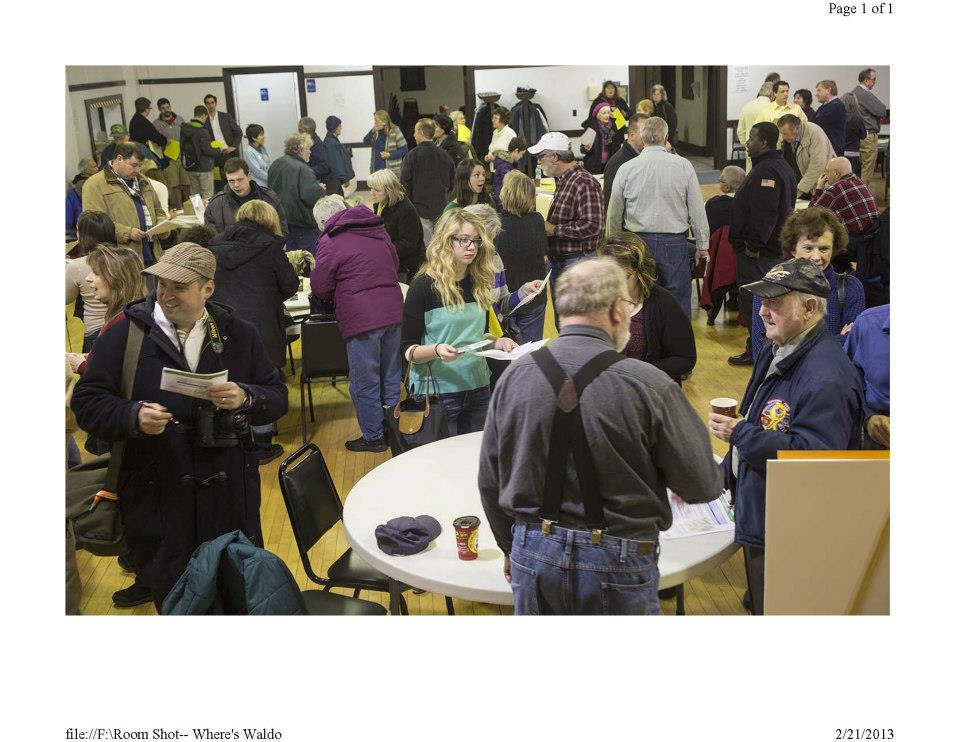
Thank you to everyone who came out to our big Tonawanda wide risk ranking event on February 20th!
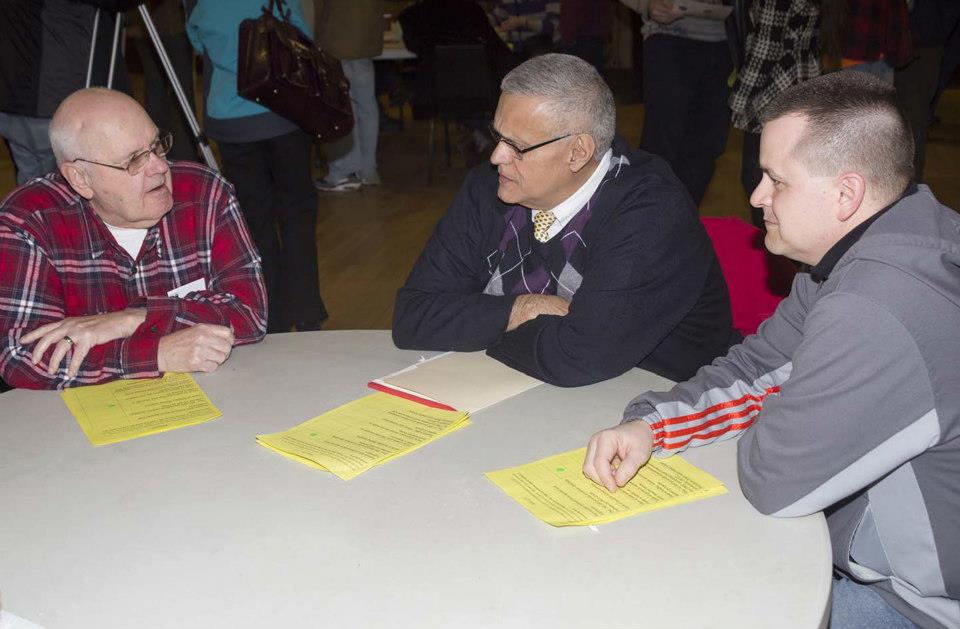
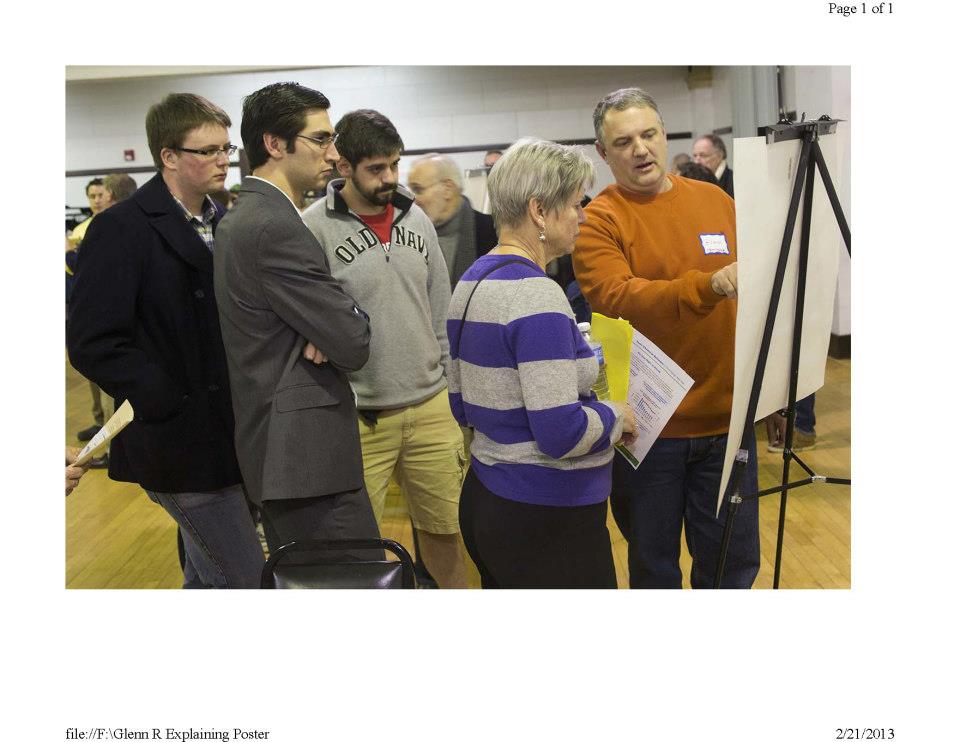
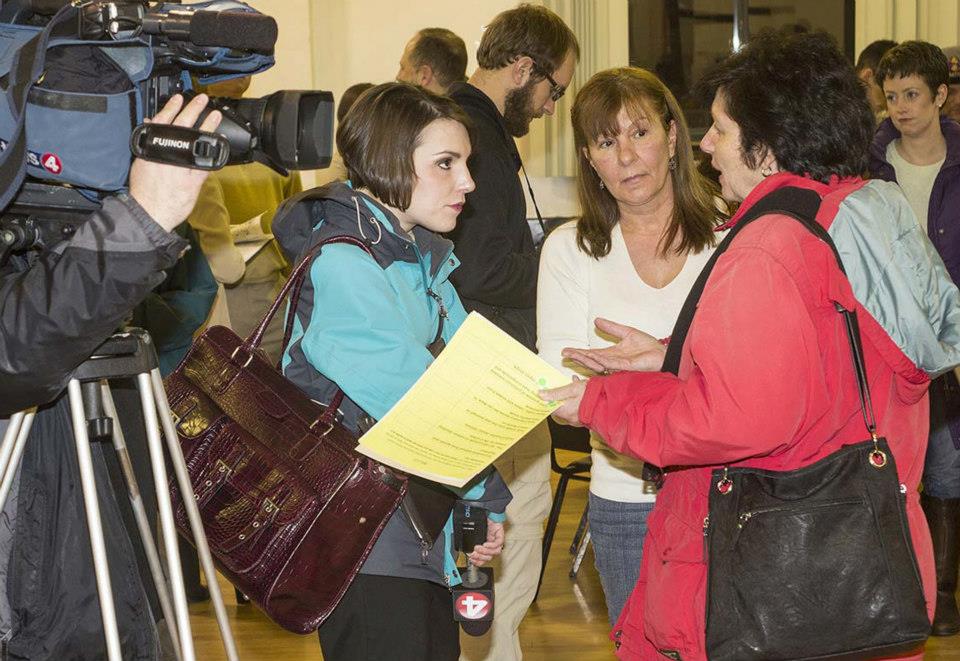
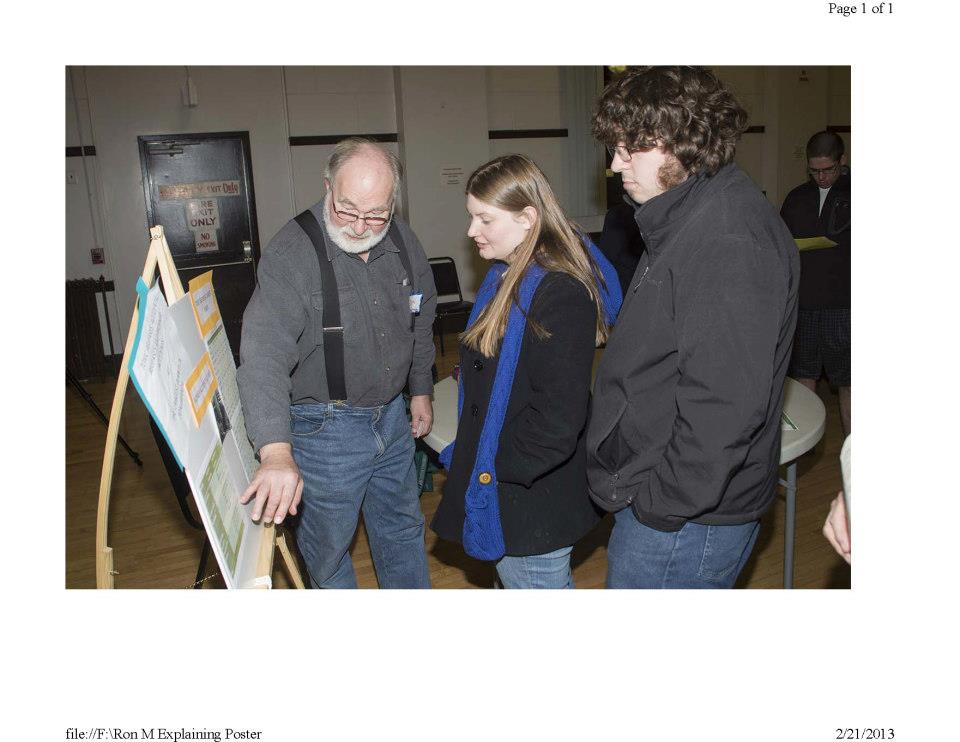
Nearly 200 people joined us at the Brounshidle Post #2 to learn the results of a years-worth of community-based environmental health research in Tonawanda NY. City of Tonawanda Mayor Ronald Pilozzi & Erie County Legislator Kevin Hardwick were in attendance. There was also representation from Congressman Brian Higgins office, State Senator Mark Grisanti’s office, the Town Supervisor’s office.
This process was made possible through the Environmental Protection Agency’s Community Action for a Renewed Environment or CARE program. Through CARE, a community is able to conduct a broad based assessment using citizen based research to identify the most dangerous risks to health then and create solutions to reduce toxics and save lives.
At the Clean Air Coalition we value resident knowledge. The research Tonawanda residents have conducted over the last year has been built on this value. Over the last year, we’ve engaged 1,341people in activities such as:
- 8 workshops, including workshops on the Toxic Release Inventory, Freedom of Information Act, Zoning and Land Use, and Pollution Prevention.
- Air testing in 3 community identified locations
- PhotoVoice; a participatory photography method for resident’s to capture the social and environmental determinants of health
- 3 focus group sessions to receive feedback on community health concerns
- Went door to door to 1,000 residents homes
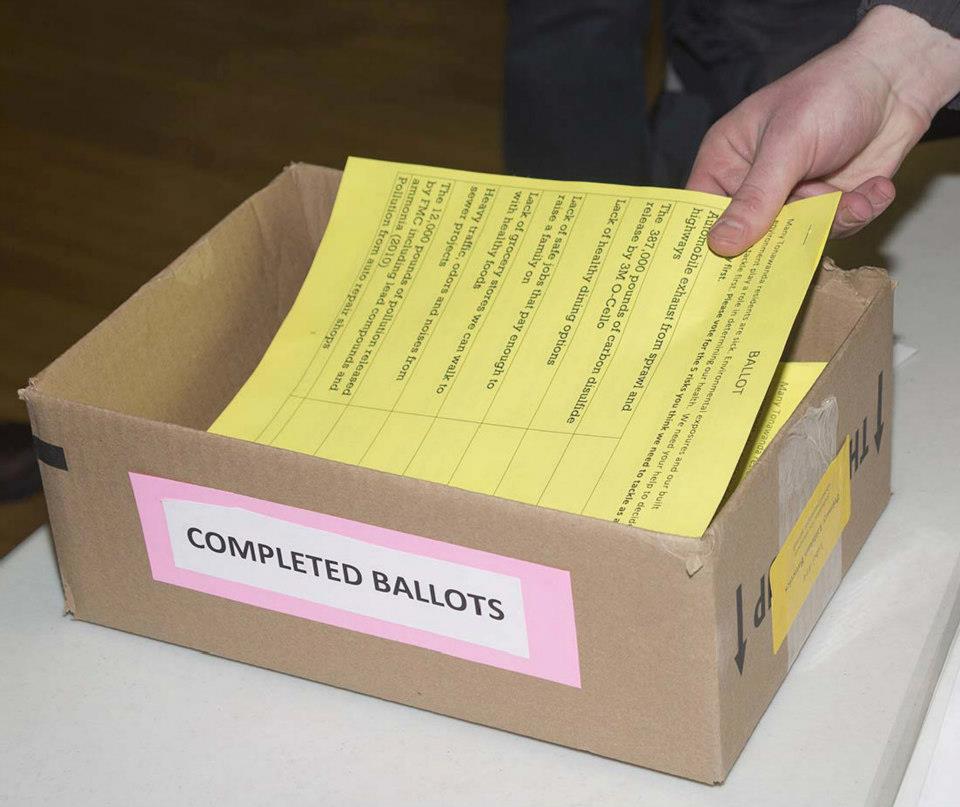
During the meeting on the 20th, residents received a ballot and after visiting 7 research stations, voted on the top 5 environmental health risks in Tonawanda. The results of these ballots will be counted by our CARE leadership team and released to the public in March.
The top 5 environmental health risks will guide our future work in Tonawanda. Thank you to everyone who attended!
The Department of Health Finds Elevated Levels of Cancer in the Tonawandas
On Monday the NYS Department of Health finally released it’s long-anticipated Tonawanda health study. The study was initiated after Tonawanda residents called on the agency to investigate the seemingly high rates of illness in their community.
NYS DOH found that lung cancer, bladder cancer, and total cancers were elevated among both males and females; esophageal cancer was elevated among males and uterine cancer was elevated among females. In sub-areas, oral cavity was elevated among males, and leukemia among females. Pre-term births and heart defects were also elevated. The full report can be found here: http://www.health.ny.gov/environmental/investigations/tonawanda/.
The Clean Air Coalition’s membership is encouraging political leadership to take the following steps to address the cancer crisis in the Town and City of Tonawanda:
- NYS DEC Commissioner Joe Martens should honor his promise to come to Tonawanda and meet with sick residents by March 31st. He should publicly announce his trip by the end of February.
- Town of Tonawanda should pass a comprehensive land use plan that incorporates residents suggestions to phase out burning coal in the town and improves public access to the waterfront.
- Policy makers should encourage DuPont to phase out vinyl fluoride at DuPont Tonawanda, the highly flammable carcinogen that led to the explosion that killed a worker in 2011.
- Get tough on Tonawanda Coke by mandating the company agree to all conditions set out in the consent order. If the conditions are not met by June, DEC and EPA should take the company to court.
- Empire State Development and the Regional Economic Development Council should allocate more funding for pollution prevention projects that help business’ identify opportunities to eliminate the use of toxic chemicals.
- Reform our economic development agencies to prevent chronic polluters from continuing to receive our tax-dollars in the form of government subsidies
- Governor Cuomo and the NYS Legislature should pass campaign finance reform to ensure resident voices are not drowned out by corporate polluters.
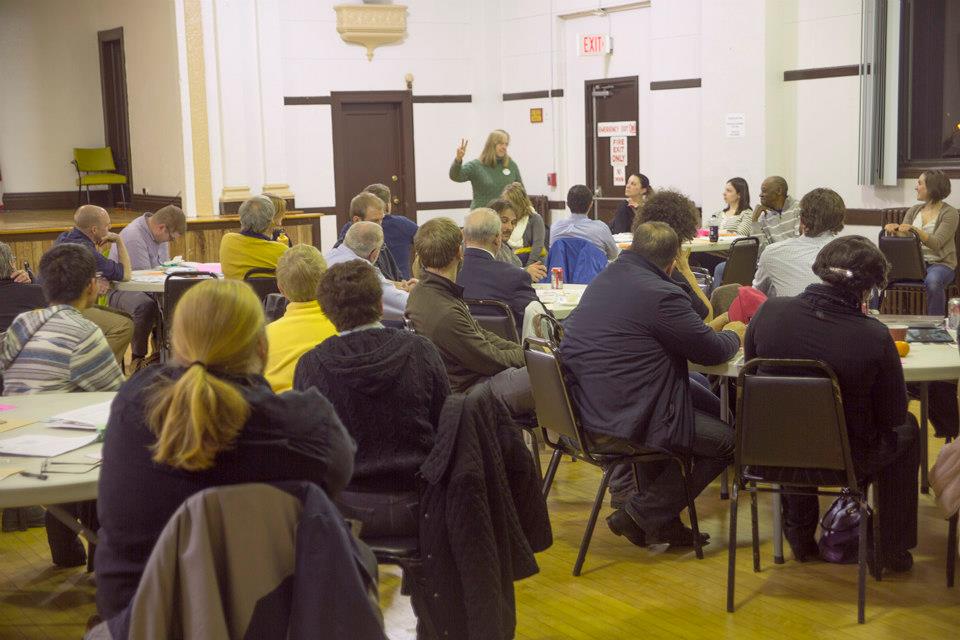
People interested in learning more about pollution in the town can attend the Clean Air Coalition’s public meeting on February 20th at 6:30 at the Brounshidle Post at 3354 Delaware Ave. Residents will share their years-worth of community-based research results. The data presented will include results of air monitoring, the emissions from large manufacturing plants, photographs taken by residents, information on worker safety in the town and more. Attendees will vote on their top health concerns. The results will be used to drive policy change in the Tonawandas. We know that together we can create a healthier community.
NYS DOH will also hold a public meeting about the study on February 26th at the Sheridan Parkside Community Center.
What’s Your Role in Our Movement?
At the Clean Air Coalition we believe that grassroots fundraising is an essential strategy for building a healthier and more just community. Fundraising is a form of organizing and movement-building. The challenges in our community are too big to face alone. It’s through collective action that we make change – and fundraising is no different.
It’s easier than ever to join our movement for a healthier region. Today we launched a new page on our website to allow you to make a sustaining gift to the Clean Air Coalition. Your monthly gift will allow us to have a source of support we can count on all year round.
To kick us off, the first 20 sustainers will recieve a Clean Air button and be entered in a drawing for two free tickets to our Annual Dinner on May 9th! If you are one of the first 20 to give, you also will be reconized on our blog, annual report and at our dinner.
Will you will join us?