Do More DuPont!
We need DuPont to Do More to reduce harmful emissions in Tonawanda
Tonawanda New York has the highest concentration of air regulated facilities in the state. DuPont is a major contributor to this air pollution. The DuPont Yerkes facility is the 3rd largest polluter in Erie County. According to the most recent data from the EPA’s Toxic Release Inventory, DuPont emits 201,239 pounds of Methyl Methacrylate and 36,400 pounds of Vinyl Fluoride, both these chemicals can cause serious health problems.
We know while the average income of households living next to DuPont Yerkes is about $11,000 a year, DuPont’s CEO’s total compensation was over $14 million in 2013. They are a Fortune 500 company, and the largest U.S. chemical maker by market value.
DuPont also has a history of violations
In 2010, an explosion at the plant killed a worker and seriously injured a second
In 2012 DuPont was fined $165,000 for violating the Clean Air Act
In 2014, DuPont was fined $440,000 for violating the Clean Air Act and the Emergency Planning and Community Right to Know Act
There are simple solutions that would reduce emissions at DuPont. But DuPont is refusing to invest in this technology. This is unacceptable.
We think Tonawanda residents and DuPont workers deserve better.
Our elected officials agree! Read letters of support from NY Senator Marc Panepinto, Erie County Legislator’s Kevin Hardwick and Peter Savage and City of Tonawanda Mayor Rick Davis and City of Tonawanda Councilwoman Jenna Koch.
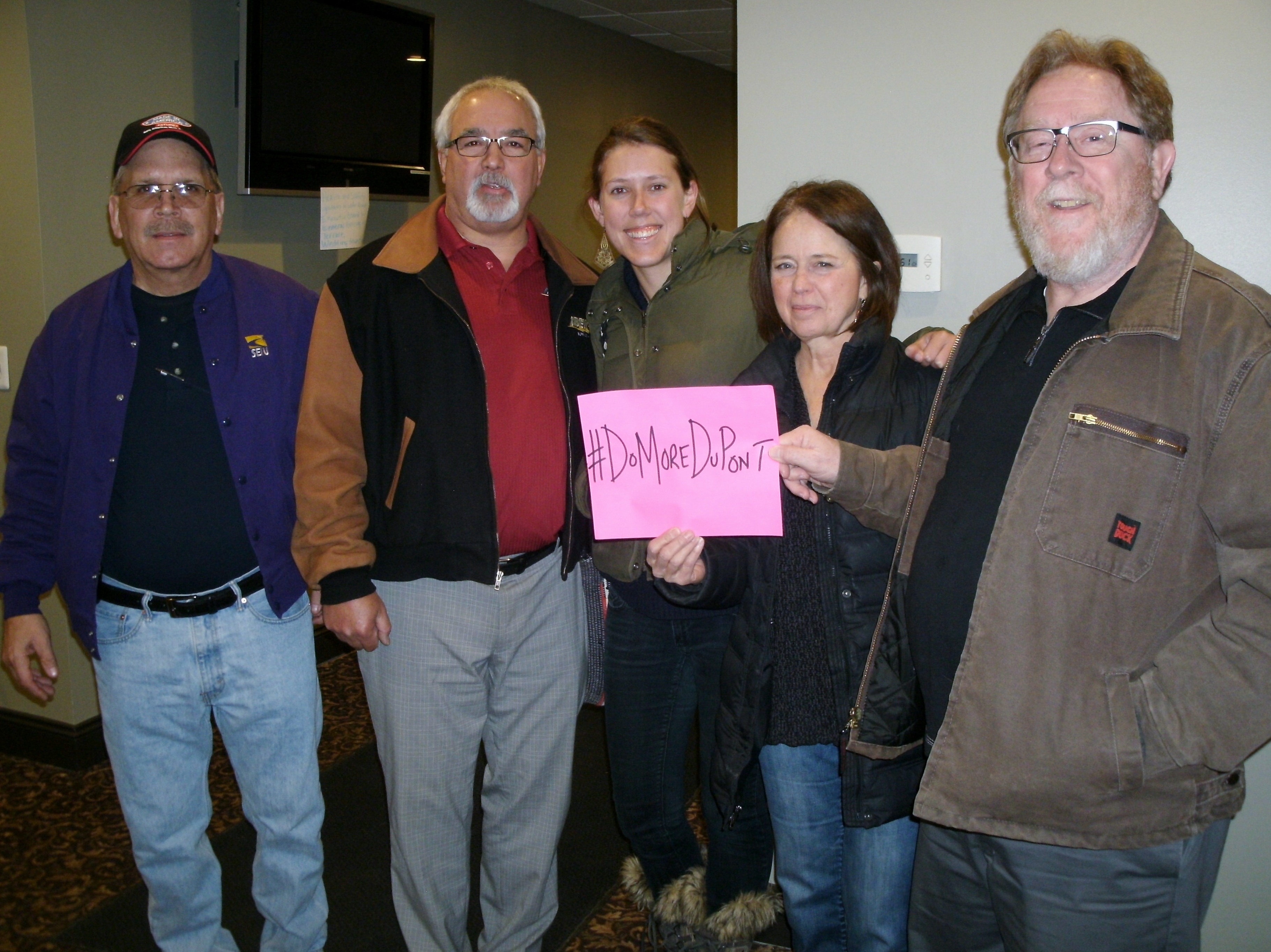
If you agree – take a picture or post on social media
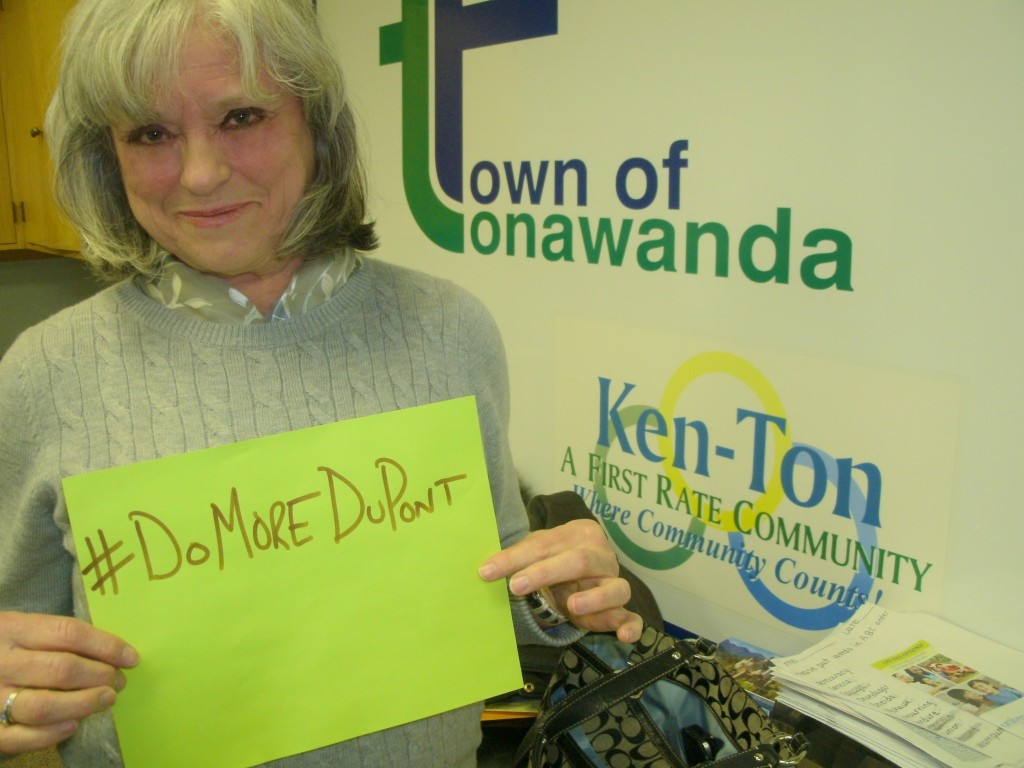 #DoMoreDuPont
Community Control Over Public Dollar$
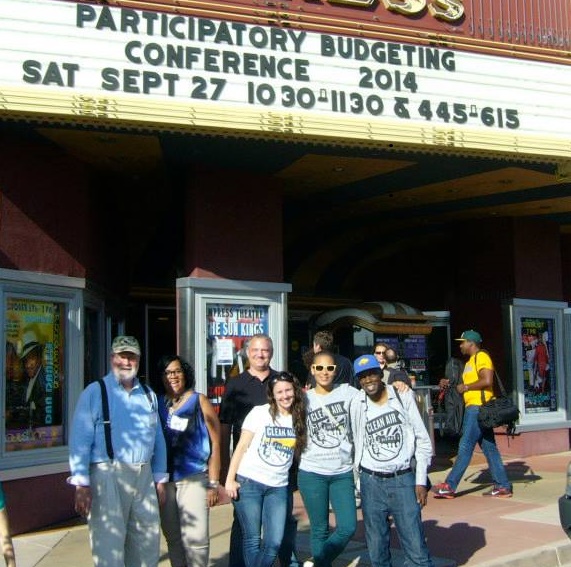
Community Control over Public Dollar$ is the culmination of the work done by the City Hall PB Committee. The committee was established by a resolution introduced by Councilman LoCurto-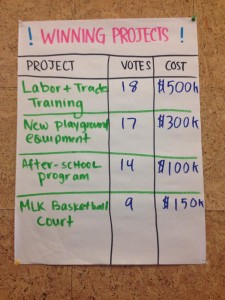 which passed unanimously, back in July, 2014 to produce recommendations on how the City of Buffalo may implement a Participatory Budgeting Process and join other cities like Chicago, St. Louis, Boston and NYC. The Committee was diverse and represented many neighborhoods in the City of Buffalo; like the Community Action Organization (CAO) of Buffalo, the Seneca Babcock Community Center, the Somali- Bantu Community Organization and the University Heights Tool Library. There were also individuals residents in the committee who were appointed by the councilmen.
The Exposition on the 25th of March is shaping up to be a fun-filled family friendly event where members of the committee will get to showcase the work they have been doing and share the committee’s recommendations and where community members will get to learn about the PB process and how it can be implemented right here in Buffalo.
We really hope you can join us! If you have any questions, call our office @852.3813 or email natasha@cacwny.org. Join the event on facebook!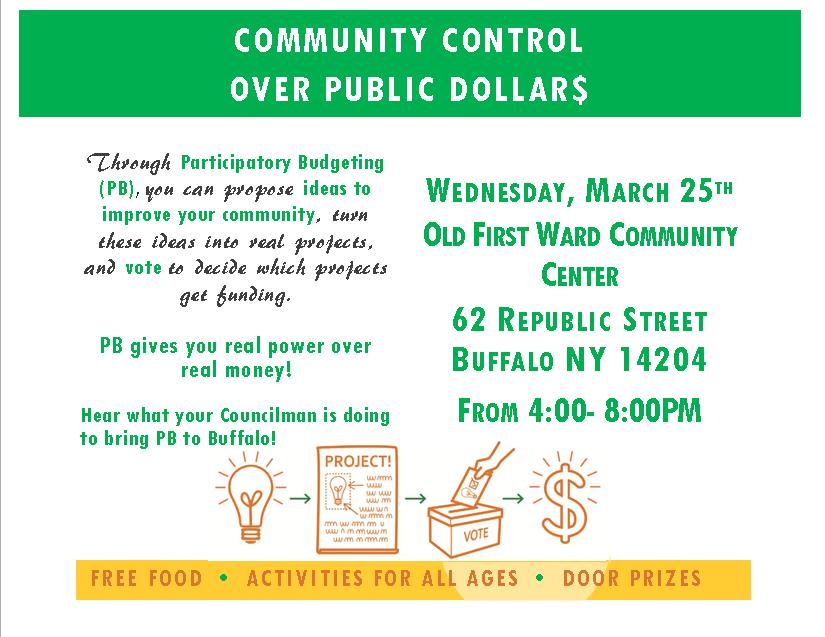
Clean Air members featured in Slate Magazine
“We have to move past the point where your zip code determines the quality of your life,” stated Virginia Golden, Clean Air member in Slate Magazine in today’s article, America’s Unfair Rules of the Road: How our transportation system discriminates against the most vulnerable, sheds light on people living in Buffalo, New Orleans, Detroit, Johnson County Kansas and other cities who are facing discrimination and racism.
Read the entire article here.
Just Transition: Pathway to Prosperity and a Healthy Planet
Recent years have demonstrated that extreme weather is the new normal. The Australian heat wave, Hurricane Sandy, the Buffalo Snowvember, and the blizzard currently hammering the Eastern seaboard, can all be attributed to climate change.
The burning of fossil fuels is the main cause of the climate change crisis. It is a manmade phenomenon and will, if not abated, lead to ever-greater destruction of the environment of this planet. Working and poor people will be impacted by climate change more than anyone. On this fact, there is literally no scientific debate.
The question must be asked: who are the forces denying this reality and what can be done to transform our energy production and energy needs to stop this destructive path?
At its base, the climate change issue exposes underlying economic forces. The leading deniers of climate change reality are in the fossil fuel business. For them, moving away from from fossil fuels to renewable energy sources represents a profound crisis.
This is particularly true of the Koch Brothers and their various public offspring. They buy elections and pay for spokespeople in order to continue to expand an empire built on destroying the environment. And more often than not, the same people who fund anti-environmental campaigns favor and fight for policies that harm workers and benefit the 1%.
The world is at a crossroads on this question, and the move to renewable energy is an urgent necessity. Solutions can and must be found.
For the broad masses of the world’s people these solutions must be found in such a manner as to improve economic well being; not as an excuse to shift the burden of needed changes onto their backs. Fortunately, such a path does exist and it is possible.
The key concept is that of a Just Transition from fossil fuels to renewable energy. A Just Transition does not destroy jobs, it creates hundreds of thousands of new ones: it helps communities keep services and schools, it doesn’t gut them; it expands public transportation with modern, more efficient buses and trains; it fosters public/private partnerships like Solar City (being built on the site of the old Republic Steel); and it provides opportunties for co-operative worker-owned businesses that are powered by green energy. Further, we must dedicate massive investment in our crumbling infrastructure and pay for it by ending subsidies to the oil and gas industry.
The time has come to address this problem by taking a hard look at the forces on either side of this divide. Either line up with a broad-based mass movement for a greener earth and more fair economy or deny what the world’s scientific community has declared and be part of the modern flat earth society and the Koch Brothers’ empire.
Richard Lipsitz is President of the Western New York Area Labor Federation, AFL-CIO.
Erin Heaney is Executive Director of the Clean Air Coalition.
* Note: this commentary was re-posted from The Public. To visit go to www.dailypublic.com
Community Update on Tonawanda Pollution Prevention Projects
 Did you know that Tonawanda has the highest concentration of major air pollution sources in New York State?
Pollution prevention is one way to reduce emissions into our community. It means eliminating toxic chemicals at the source, instead capturing emissions at the end of a process.
Representatives from the Department of Environmental Conservation (DEC) and the Pollution Prevention Institute will share information on pollution prevention programs that have been taking place in Tonawanda.
Join us, give feedback, and share your thoughts for potential future projects.
January 28th, 2014
6:00- 7:30
St. Bartholomew Church 2368 Eggert Road, Tonawanda, NY 14150
For more information contact Rebecca at 852-3813
Our Favorite Movements of 2014!
2014 has been an exciting year at Clean Air!
We’ve witnessed the sentencing of Tonawanda Coke and won a full investigation after the plant’s explosion, we’ve won a commitment from the state to invest millions of dollars in pollution reducing technology at the Peace Bridge Plaza, we hosted a very successful Just Transitions Conference to plan our fight for workers and our tax dollars in case our coal plant retires, won a Common Council resolution to explore Participatory Budgeting in Buffalo and kicked off the City’s PB committee, joined residents in Seneca Babcock fighting for their quality of life, we’ve presented at the 3rd International Conference on Participatory Budgeting in Oakland California, won a historic victory on Amigone Crematory – ending over 20 years of human ash that polluted a neighborhood, we’ve hosted social and economic justice leaders like Les Leopold, Brent Bucknum, Josh Lerner, Claire Miller, Sean Sweeney and Jean Pogge…
and don’t forget… we’ve moved into a bigger office and grown our staff!
Below are a few of our staff’s favorite moments. What was yours?
Erin: My favorite moment was sitting with the staff and membership at our retreat at Stella Niagara singing along as Bill led us. I loved learning about the songs of resistance, making noise with people I love, and regenerating ourselves for the fights to come!
Natasha: My favorite moment of 2014 was in Oakland California for the 3rd International Conference on Participatory Budgeting in North America. As an organization we have been researching, advocating for and promoting PB as a means to allocate public dollars in the Tonawanda Coke case and in the City of Buffalo. We attended the 2nd International Conference in Chicago with Heart of the City Neighborhoods, Hispanics United, Councilman Rivera’s office and members before trying the process out in Tonawanda. So for the third conference we thought we would apply to present on the work we’ve been doing organizationally- and our proposals were accepted!
We prepped for months, for many of our members it was the first time they would be presenting on a panel in general, let alone for an international audience. Anyway, 3 of our members were presenting on the first day of the conference, almost back to back, on two different panels, so of course Rebecca and I attended both sessions. I was taking pictures on my phone and on our camera, smiling from ear to ear- I was so proud of our members and our organization. In between our member’s presentations I received an email from Ms. Lehman from the NYS Thruway Dept. where she informed me that the Public Bridge Authority just passed a resolution to invest approximately $3 Million on green infrastructure to act as buffers between the Peace Bridge Plaza and the residents- something we have been pushing the PBA to do for years. Yes, I think that was my favorite moment of 2014.
Rebecca: My favorite moment from this year was working with the technical team to review and comment the DuPont Yerkes air permit. We aim to get 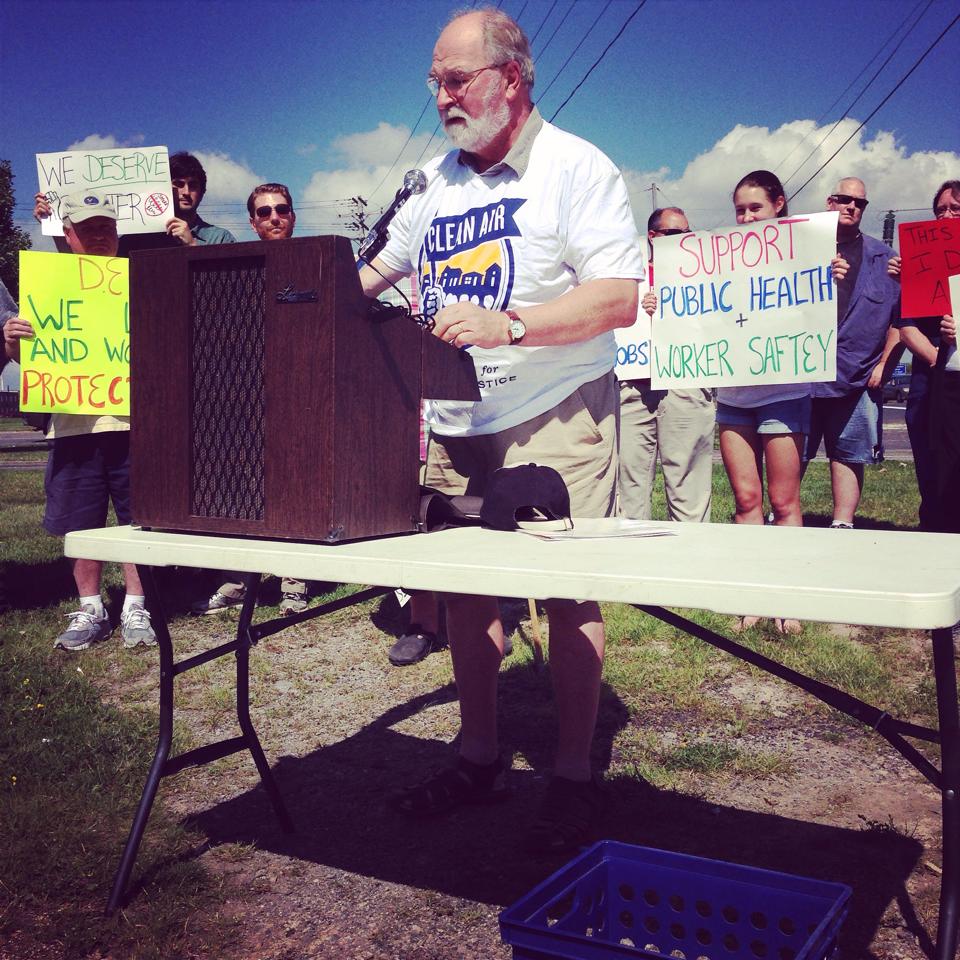 technology in the plant to improve the safety and health of workers and residents who live near the facility. Our group read and reviewed 100’s of documents, met weekly to problem solve and try to identify ways the company could monitor more accurately, and find ways the facility could reduce , emissions. After we set our comments into DEC we held a press conference outside the plant, and were joined by allies in Labor, the City of Tonawanda Mayor’s Office, and from the Western New York Council on Occupational Safety and Health. Being able to comment on something like an air permit took a lot of patience and it was a learning curve for all of us. Our demands have now been sent on to EPA – and I am excited to see what next year will bring.
Rachel: My favorite moment was the vote at the Erie County Legislature that kept Amigone Crematory from opening again in our members’ backyards! The 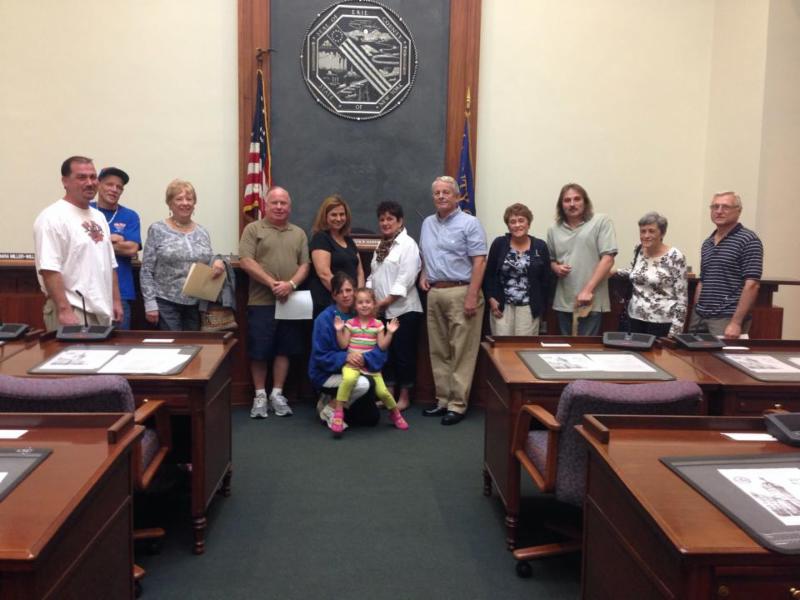 anticipation as each legislator cast their vote and the collective shift in energy as we all realized that the motion had passed was such a special experience. It reminded me that real people can make change happen! If you missed it, check out our video of the vote here.
Victory at Amigone!
TELL THESE LEGISLATORS
THANK YOU!
Call them, write them and tell them that we appreciate their support! For contact information visit the Erie County Legislatures website.
Voting against the resolution were Majority Leader Joseph C. Lorigo, C-West Seneca; Republicans Edward A. Rath of Amherst and Ted Morton of Depew; and Independence Party member Lynne M. Dixon of Hamburg.
Clean Air has been active in the fight to stop the crematory from operating next to homes, working closely with our members who live next to the crematory. We are thrilled to celebrate this win with the many residents who have fought this battle for over 20 years!
WATCH and READ the coverage in the:
We Believe that Grassroots Action
Makes Change!
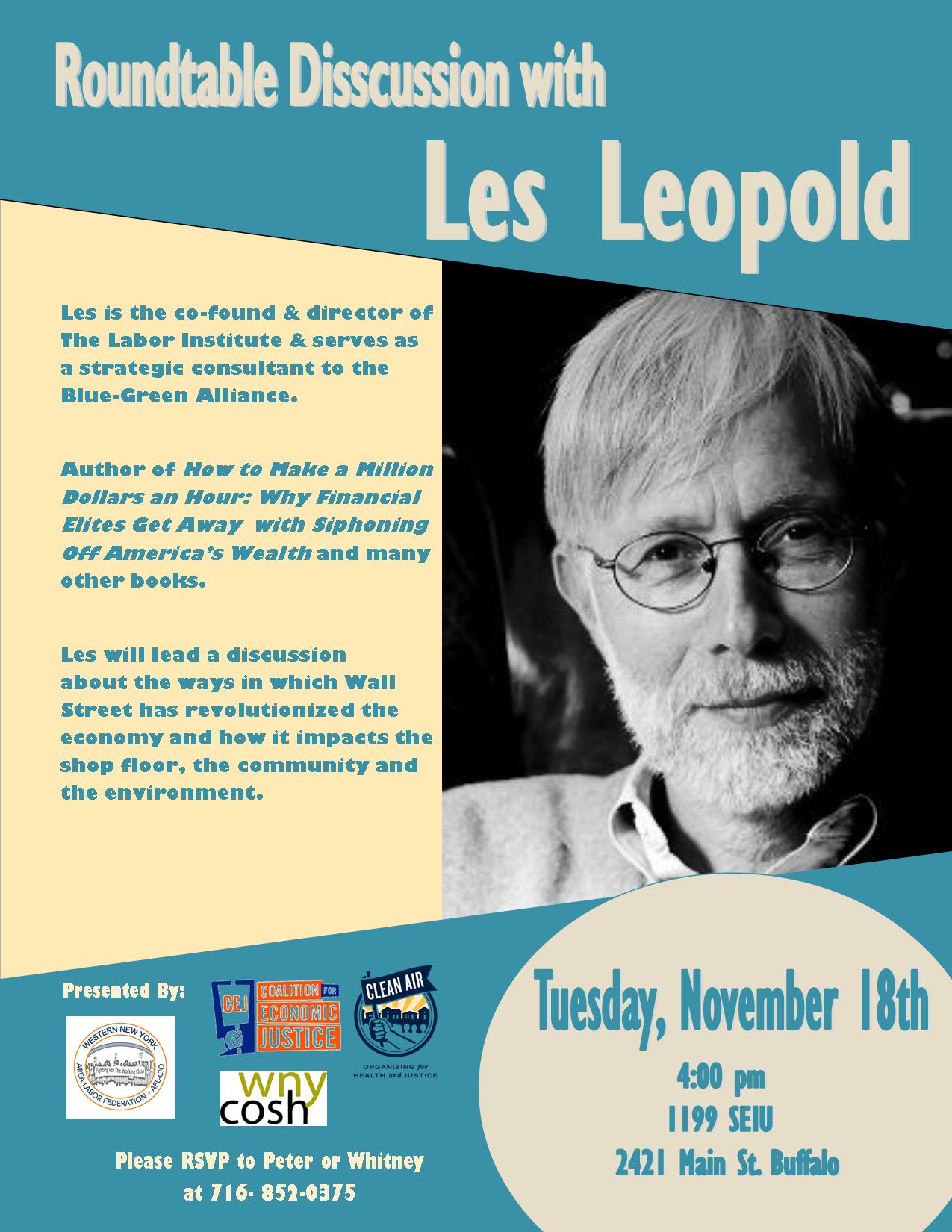
Roundtable Discussion with Les Leopold!
Les is the co-founder and director of The Labor Institute and serves a strategic consultant to the Blue Green Alliance.
Author of How to Make a Million Dollars and Hour: Why Financial Elites Get Away with Siphoning Off America’s Wealth and many other books.
Les will lead a discussion about the ways which Wall St. has revolutionized the economy and how it impacts the shop floor, the community and the environment.
Tuesday, November 18th 4-7pm SEIU 1199 2421 Main St. Buffalo RSVP to Pete or Whitney at 852-0375This event is sponsored by the Western New York Labor Federation, Clean Air: Organizing for Health and Justice, The Coalition for Economic Justice, and the Western New York Council on Occupational Safety and Health.
We need you to keep Tonawanda residents safe!
ACTION ALERT!
For years, our members have lived with smells and odors from the Amigone’s crematory. We’re close to ensuring residents will never have to endure this again. We need the Legislators who can vote on the Amigone resolution to vote YES Thursday. We need you to help them make the right decision. If you want to help the neighborhood win, please participate in any of these activities this week.
- CALL these people to say thank you for their support and to ask them to vote yes again Thursday, October 2nd
| Name | Phone number |
| Thomas Loughran | 836-0198 |
| Barbara Miller-Williams | 842-0490 |
| Peter Savage | 832-0493 |
| Kevin Hardwick | 858-8672: Give him extra thanks for leading the resolution! |
- CALL THESE PEOPLE AND ASK THEM TO VOTE YES ON THURSDAY
| Name | Phone number |
| Pat Burke | 858-8480 |
| Betty Jean Grant | 894-0914 |
- Come to the Erie County Legislature on Thursday for the next vote. The meeting is on the 4th floor at 92 Franklin and begin promptly at 2:00. We need to pack the house to demonstrate our power. Let us know you can make it by calling Erin or Rebecca at 852-3813.
Battaglia Recycling – Residents Fight for Quality of Life
Since Battaglia Demolition began operations a little over 10 years ago residents of Peabody St. and the surrounding neighborhood have complained to the State and City of Buffalo regarding dust and soot coming from the facility; loud noise beginning early in the morning from the bulldozers and the concrete crusher; and massive truck traffic that is routed down small residential streets.
Film by Vince Mistretta